|
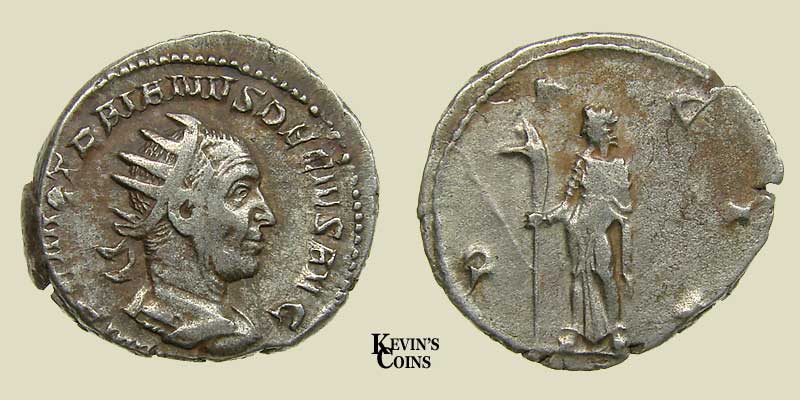
AR Antoninianus (22mm 4.42g) Struck AD 249-251 Rome
Obv: IMP C M Q TRAIANVS DECIVS AVG Radiate, draped bust right
Rev: DACIA Dacia standi left holding a staff with a draco head
RIC IV part2 12b, Sear 9368
ex. Calgary Coin (Robert Kokotailo)
The Front (Obverse): Meet the Emperor
- The Visual: You see a right-facing portrait of Emperor Trajan Decius. He is wearing a spiky "radiate" crown (which looks like sunbeams) and a draped toga.
- The Latin Text (Inscription): IMP C M Q TRAIANVS DECIVS AVG
- What it stands for: Imperator Caesar Messius Quintus Trajanus Decius Augustus
- The Meaning: This is the emperor's official royal title. The spiky crown isn't just for fashion—it tells ancient Romans exactly how much the coin is worth. It signifies an Antoninianus, a silver denomination introduced to be worth two standard denarii.
The Back (Reverse): A Political Power Move
- The Visual: A personification of Dacia (a region in modern-day Romania) standing and looking left. She is holding a long staff topped with a draco head—a famous battle standard shaped like a dragon or serpent with a fabric body that would flutter in the wind.
- The Latin Text: DACIA
- The Meaning: Trajan Decius took the name "Trajan" specifically to remind everyone of the legendary Emperor Trajan, who had conquered Dacia over a century earlier. By placing Dacia on his coins, Decius was bragging about his military control over this vital frontier province, signaling to his citizens: "Don't worry, the borders are safe under my watch."
The Historical Gossip
This coin was minted during the Crisis of the Third Century, a wild time when Rome suffered from constant civil wars, economic crashes, and barbarian invasions.
Trajan Decius actually grabbed power by overthrowing the previous emperor (Philip the Arab) in battle. Because things were so unstable, emperors used coins like flyers or social media posts to spread political propaganda. By celebrating "Dacia" and showing off military symbols like the draco, Decius was trying to prove he had the strength to keep the Roman Empire from falling apart. Ironically, his focus on the region was his undoing—he was killed in battle by the Goths in Dacia just a couple of years later!
|