
Trajan
| MARCVS VLPIVS TRAIANVS, born near Seville, Spain in 52 to Marcia and Marcus Ulpius Trajanus, pursued a military career and was appointed Governor of Germania Superior by Nerva in 97 shortly before being adopted by him. He became Augustus upon Nerva's death on January 25, 98. Although best known for adding Dacia to the Empire by a series of wars (101-106), he also built many public works and administrated ably. The Empire reached its maximum size in 117 after his Parthian victories (114-117). He died on August 8, 117, was deified, and buried in his monumental column in Rome. |

Silver Denarius (18mm 3.39g) Struck AD 103-111
Obv: IMP TRAIANO AVG GER DAC PM TR P Laureate bust right
Rev: COS V P P S P Q R OPTIMO PRINC Pax standing left, leaning on column, holding olve branch
RIC II 126
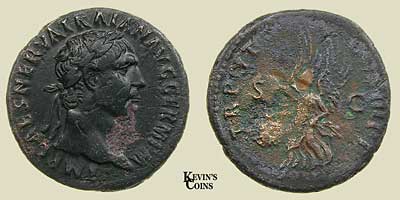
Copper As (27mm 10.71g) Struck AD 101-102 Rome
Obv: IMP CAES NERVA TRAIAN AVG GERM P M Laureate bust right
Rev: T R POT COS IIII P P S C Victory alighting left, holding palm and sheild inscribed SPQR
RIC II 434
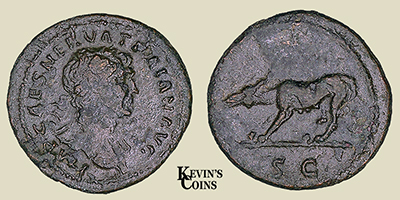
Copper Quadrans (16.6mm 2.7g) Struck 107 A.D. Rome
Obv: IMP CAES NERVA TRAIAN AVG Laureate bust right
Rev: She wolf standing left. S C in exergue
RIC II 694 Sear 3246
ex. Frascatius
The Obverse (Front Side)
- The Image: A right-facing profile portrait of the Emperor Trajan. He is depicted wearing a laurel wreath (laureate), the traditional Roman symbol of victory, military triumph, and imperial authority.
- The Inscription (Legend): IMP CAES NERVA TRAIAN AVG
- The Interpretation: This is an abbreviation of Trajan's official titles. Expanded, it reads: Imperator Caesar Nerva Traianus Augustus.
- IMP (Imperator): Acclaimed military commander.
- CAES (Caesar): The imperial family name, used as a title of the ruler.
- NERVA: Trajan was adopted by the previous emperor, Nerva, so he includes his adoptive father's name to solidify his legitimate right to the throne.
- TRAIAN (Traianus): His actual name.
- AVG (Augustus): The ultimate title of the emperor, meaning "venerable" or "majestic."
The Reverse (Back Side)
- The Image: The She-Wolf (Lupa Romana) standing and facing left.
- The Interpretation: The she-wolf is one of the most powerful, oldest symbols of Roman identity. According to myth, she nursed the abandoned twin founders of the city, Romulus and Remus. By placing the she-wolf on the coin, Trajan is deliberately evoking classic Roman patriotism, foundational mythology, and national pride.
- The Inscription: S C (typically located in the exergue, the small space at the very bottom of the coin).
- The Interpretation: This stands for Senatus Consulto, which translates to "By Decree of the Senate." While the emperor had total control over precious metal coins (gold and silver), base metal coins (like copper and bronze) traditionally carried the S C mark to show that they were officially sanctioned by the Roman Senate to serve as legal tender.

