
Roman Provincial Coins
| Roman provincial coinage, often referred to as "Greek Imperials," represents the vast array of currency minted by cities and regions across the Roman Empire outside of Rome itself. While the central mint produced standardized gold and silver for the entire empire, hundreds of local civic mints—spanning from Spain to Syria—were permitted to strike their own bronze and occasional silver issues. These coins are a treasure trove for historians because they reflect local identity and civic pride. Unlike the uniform imperial types, provincial issues frequently featured local deities, regional landmarks, and depictions of indigenous festivals or mythologies. They functioned as a bridge between the central Roman authority and diverse local cultures; one side typically displayed the Emperor's portrait, signifying loyalty to Rome, while the reverse celebrated the specific city’s heritage. Because denominations and artistic styles varied wildly between provinces, this series offers a remarkably textured view of the empire's economic and cultural complexity. |

Herod Agrippa AE Prutah (17.3mm, 2.63g) Struck 41-42 AD Jeruselum
Obv: ΒΑϹΙΛΕΩϹ ΑΓΡΙΠΑ Royal umbrella-like canopy with fringes
Rev: Three plump ears of barley or grain growing between two leaves L Ϛ (regnal year 6)
RPC I 4981, Hendin 6274

Claudius AE26 (26mm 14.1g) Syria, Antioch AD 41-54
Obv: IM TI CLA CAE AV GER laureate head of Claudius, right
Rev: S C inscription within a laurel wreath of eight leaves
RPC 4279, BMC 166-7 Suspect "desert patina"

AE Prutah (16mm 2.81g) Procurator Antonius Felix, Struck Judea 54 A.D.
Obv: NEPΩ KΛAY KAICAP Two sheilds and two spears crossed
Rev: Six Branched palm tree bearing two bunches of dates L-ID K-AI across fields
Hendin (4)652, (5) 1348 Ex David Hendin

AR Tetradrachm of Vespasian (24mm 15.05g) Struck A.D 70-71 Antioch, Syria
Obv: ΑΥΤΟΚΡΑΤ ΚΑΙΣΑ ΟΥΕΣΠΑΣΙΑΝΟΥ (of Emperor Caesar Vespasian) Laureate head right
Rev: ΕΤΟΥΣ Γ ΙΕΡΟΥ (of year 3, sacred) Eagle standing left on club, palm to left
RPC 1947

Silver Hemidrachm of Vespasian (13.7mmm 1.42g) struck in Cappodocia, Ceasarea
Obv: ΑΥΤΟΚΡ ΚΑΙϹΑΡ ΟΥΕϹΠΑϹΙΑΝΟϹ ϹΕΒΑ, laureate head of Vespasian, right
Rev. Nike advancing right, wreath in right hand, palm in left hand
RPC II 1659 S 94, Metcalf Conspectus 17, Ganschow 71
ex. Ricky Newhart

Domitian AE Diassarion (22mm 7.66g) Antioch AD 81-96
Obv: ΔOMITIANOC KAICAP CEBACTOC ΓEPMANKOC Laureate head right (Inscriptions start at 12 o'clock)
Rev: EΠIMEAH TI KA AΓΛAOY ΦPOYΓI ANTIOXE Dionysus standing, left, leaning on columns, holding cantharus and thyrsus; to left, panther
RPCII 1218 Cop. 49

AE17 Domitian (17mm 3.64g) Aeolis, Temnus AD 81-96
Obv: ΔΟΜΙΤΙΑΝΟϹ ΚΑΙϹΑΡ (Domitian Caesar) laureate head of Domitian, right
Rev: ΕΠΙ ΔΙΟΝΥϹΟΔΩΡΟΥ ΑΓΝΟΥ ΦΙΛΟΠΑΤΡΙΔΟϹ ϹΤ[ΡΑΤΗ], ΤΗΜΝΙ (under Dionysodoros Hagnos philopatris, strategos of the Temnians) Dionysus standing, left, with cantharus and thyrsus
RPC II 980A ex Caribou Coins
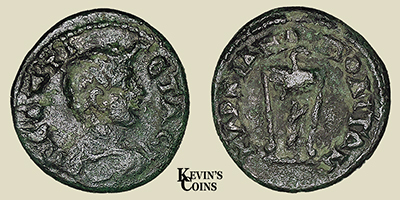
Geta AE17 (17mm, 3.12g) Markianoplis, Thrace AD 198-212
Obv: Π CEΠTI ΓETAC Draped bust right
Rev: MAΡKIANOΠOΛEITΩN serpent climbing up a tripod altar
Varbanov 860. Moushmov 519

Macrinus AE26 ( 25mm 7.56g) Moesia Inferior, Nicopolis ad Istrum AD 217-218
Obv: AY K OΠΠEΛ CEYE ٠ MAKPEINOC, laureate, draped and cuirassed bust right, seen from behind.
Rev: VΠ AΓPIΠΠA NIKOΠOΛI[TΩN ΠPOC IC/TPΩ, Serpent entwined around branch
Varbanov 3414-5

Diadumenian AE26 ( 25mm 7.56g) Moesia Inferior, Nicopolis ad Istrum AD 217-218
Obv: Κ Μ ΟΠΠΕΛ ΑΝΤΩΝΙ ΔΙΑΔΟΥΜΕΝΙΑΝΟϹ, Bare head right – seen from behind
Rev: ΥΠ ΑΓPΙΠΠΑ ΝΙΚΟΠΟΛΙΤΩΝ ΠPΟϹ ΙϹΤ, City gate with three crenulated towers
Varbanov 3637, Moushmov 1314

Moesia Inferior Markianopolis AD 218-222 (27mm 11.05g)
Obverse: ΑΥΤ Κ Μ ΑΥΡH ΑΝΤΩΝΕΙΝΟϹ (Emperor Caesar Marcus Aurelius Antoninus Augustus) laureate, draped and cuirassed bust of Elagabalus, right, seen from rear
Reverse: ΥΠ ϹΕΡΓ ΤΙΤΙΑΝΟΥ ΜΑΡΚΙΑΝΟΠΟΛΙΤΩΝ (during the (pro)consulship of Sergius Titianus, of the Marcianopolitans) Hera standing facing, head left, holding patera and long sceptre
RPC VI 1510 Moushmov 656, AMNG 879–81 ex. Harry Stewart
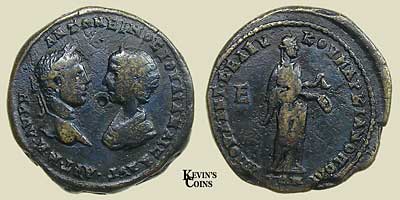
Moesia Inferior Markianopolis AD 218-222
(27mm 13.12g) AE 27
Obv: ΑΥΤ Κ Μ ΑΥΡΗ ΑΝΤΩΝΕΙΝΟϹ ΙΟΥΛΙΑ ΜΑΙϹΑ ΑΥΤ Confronted busts of Elagabalus and Julia Maesa
Rev: VΠ ΙΟVΑ ΑΝΤ ϹΕΛΕVΚΟV ΜΑΡΚΙΑΝΟΠΟΛΙΤΩΝ Hygeia standing right feeding serpent from patera. E in left field.
Magistrate Seleucus
Moushmov 693. , AMNG 959v Ex Jerry Coddington
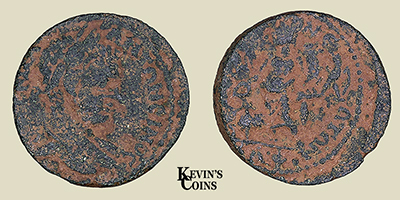
AE 24 (24mm, 10.92g) AD 218-222
Obv: ΑΥΤ Κ Μ Α ΑΝΤΩΝΕΙΝΟϹ laureate head of Elagabalus, right, with drapery
Rev: ΡΕΦΑΝΕΩΤΩΝ, ΒΛΦ Genius standing facing, head left, wearing kalathos, holding patera and cornucopia; at his feet, bull, left; on either side, eagle

AE34 (34.21 mm, 25.27 g) Struck AD 238-244 Pisidia, Antioch
Obv: IMP CAES GORDIANOVS A Laureate draped bust right
Rev: CAES ANTIOCH COL S R She-wolf standing right suckling Romulus and Remus under a fig tree
SNG France 1210-1212
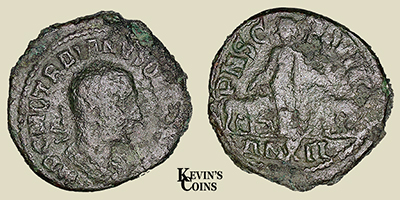
Trajan Decius AE Sestertius (22.5mm 13.03g)Moesia Superior. Viminacium AD 250-251
Obv: IMP C M Q TRAIANVS DECIVS AVG Laureate and cuirassed bust right, seen from behind.
Rev: PMS-C-OL VIM Moesia standing facing, arms outstretched over a bull and a lion. ANXII in ex. (year 12)
AMNG 128 RPC IX, 21

Time of Maximinus II Daia. AE 1/4 Follis (14MM 1.49G) Persecution Series. Antioch AD 310-313
Obv: GENIO AN-TIOCHENI, Tyche of Antioch, turreted, wearing cloak and veil, seated facing on rock; at her feet, river god Orontes swimming right
Rev: APOLLONI SANCTO, Apollo standing left holding patera and lyre
Vagi 2954

