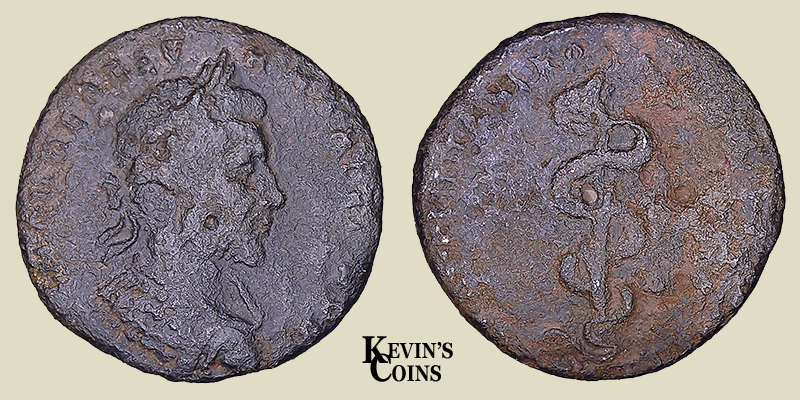
Macrinus AE26 Moesia Inferior, Nicopolis ad Istrum AD 217-218

Macrinus AE26 ( 25mm 7.56g) Moesia Inferior, Nicopolis ad Istrum AD 217-218

Obv: AY K OΠΠEΛ CEYE ٠ MAKPEINOC, laureate, draped and cuirassed bust right, seen from behind.

Rev:  VΠ AΓPIΠΠA NIKOΠOΛI[TΩN ΠPOC IC/TPΩ, Serpent entwined around branch

Varbanov 3414-5
ex. Gem And I  Coins

The Basics

  • The Emperor: Macrinus (He only ruled for about 14 months, from AD 217 to 218, after being involved in a plot to assassinate the previous emperor, Caracalla).
  • The Size: AE26. The "AE" simply means it's made of bronze or copper, and "26" means it is 26 millimeters wide (just a tiny bit wider than a modern US Quarter).
  • Where it was made: Nicopolis ad Istrum in the region of Moesia Inferior. This was a major Roman city founded by Emperor Trajan, located near the Danube River in what is now northern Bulgaria.

Front of the Coin (Obverse)

The front shows a portrait of Macrinus looking to the right. He is wearing a laurel wreath (the ultimate Roman symbol of victory) and military armor.

The Greek inscription reads: AY K OΠΠEΛ CEYE ٠ MAKPEINOC

  • AY K is short for Autokrator Kaisar, which is the Greek way of saying "Emperor Caesar."
  • OΠΠEΛ CEYE is short for Opelius Severus, his family names.
  • MAKPEINOC is his actual name, Macrinus.

Back of the Coin (Reverse)

The back features a cool, mysterious image: A sacred snake (serpent) coiled tightly around a tree branch.

In the ancient world, snakes weren't seen as scary or evil—they were symbols of healing, medicine, and renewal because they shed their skin! This imagery is deeply tied to Glycon (a popular snake god of the time) or Asclepius (the Greek god of medicine). Cities often put these symbols on coins during times of plague or to pray for the good health and safety of the empire.

The Greek inscription around the border reads: VΠ AΓPIΠΠA NIKOΠOΛITΩN ΠROC IC/TPΩ

  • VΠ AΓPIΠΠA means "Under Agrippa." Marcus Claudius Agrippa was the local Roman governor running the region at the time. Putting his name on it dated the coin perfectly!
  • NIKOΠOΛITΩN ΠROC ICTPΩ translates to "Of the citizens of Nicopolis on the Istrum." (Istrum was the ancient name for the Danube River).


Site hosted free courtesy of VCoins.com
Ancient Coins on Vcoins

Untitled 1

In an effort to spare you my horrible grammar and spelling, I use artificial intelligence to assist in content creation.

Visit My Blog

logo

Email Kevin

*