
Roman Countermarked Coins
Countermarks on Roman imperial coins were small stamps punched onto existing coins after they had already entered circulation. These marks were applied by imperial authorities, local governments, military units, or occasionally merchants. Countermarking was especially common during periods of coin shortages or political transition, when older coins needed to be revalidated without the expense of striking entirely new issues.
Most countermarks appeared on bronze coins of the early Roman Empire, particularly during the first through third centuries AD. They often consisted of letters, monograms, symbols, or small portraits. Some countermarks identified an emperor, such as “NCAPR” for Nero Caesar Augustus Probavit, indicating official approval of the coin’s value. Others marked coins for use in a particular province or military district.
Countermarks served several purposes. They could extend the circulation life of worn coins, change a coin’s denomination, or demonstrate loyalty to a newly proclaimed emperor. In frontier regions, Roman legions frequently countermarked coins to provide trusted currency for soldiers and local trade.
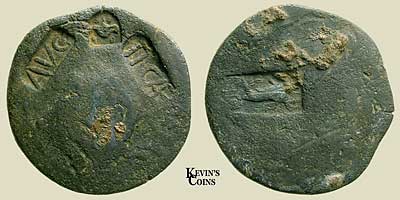
AE 21 host coin (21mm,9.39 grams)
Obv: countermarked with TICAE AVG and a Helmet most likely from the Moesia Region. The TICAE is probably for Tiberius Caesar the AVG for Augustus I'm not sure what the Helmet means
Rev:Dolphin symbol. I'm not sure the meaning of that symbol.
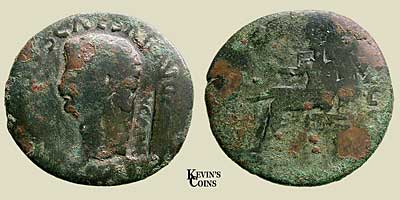
AE As of Claudius (28mm, 10.98g)
Obv: NCAPR countermark usually attributed to Nero, but could possibly be Nerva. NCAPR means either "Nero Caesar Augustus Probavit" which means roughly "by the approval of Nero Claudius Avguvstvs" The other possibility is "Nero Ceasar Augustus Populi Romani" or roughly "From Nero Caesar Augustus to the Roman People"
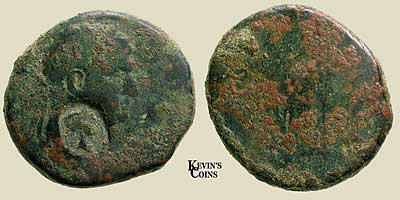
AE22 (22mm 11.90g) Provincial coin of Domitian
Obv has a head in and incuse rectangle. This is often refered to as Hadrians Head and is sometimes attributed to Legion XII

