|
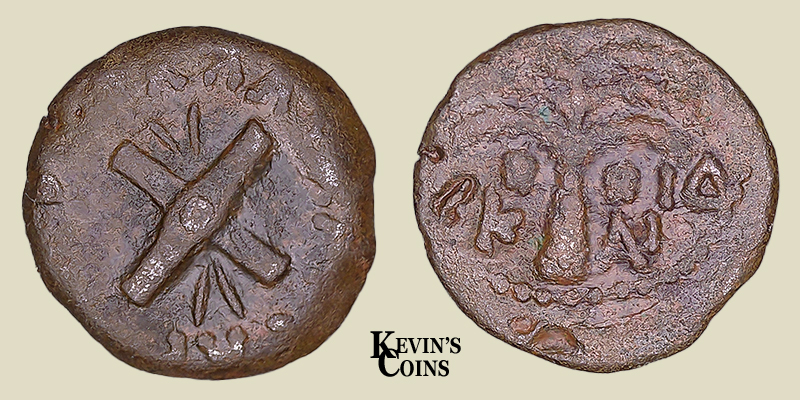
AE Prutah (16mm 2.81g) Procurator Antonius Felix, Struck Judea 54 A.D.
Obv: NEPΩ KΛAY KAICAP Two sheilds and two spears crossed
Rev: Six Branched palm tree bearing two bunches of dates L-ID K-AI across fields
Hendin (4)652, (5) 1348
ex Ancient Imports, Ex David Hendin
This coin is an AE Prutah issued in Judea under the authority of the Roman procurator Antonius Felix in the year 54 AD.
It is a small bronze pocket coin, but it has a fascinating story tied to Roman history, ancient Judea, and even the New Testament!
The Front Side (Obverse)
- What you see: Two shields and two spears crossed behind them.
- The Text: NEPΩ KΛAY KAICAP (Nero Claudius Caesar).
- The Meaning: Even though Antonius Felix was the governor on the ground making the coins, he put the name of the brand-new Roman Emperor, Nero, on it! Nero had just taken the throne in 54 AD. The crossed weapons were a symbol of Roman military power and protection.
The Back Side (Reverse)
- What you see: A palm tree with six branches and two big bunches of dates hanging down.
- The Text: L-ID K-AI spread across the empty spaces.
- The Meaning: Palm trees were the ultimate ancient symbol for the Land of Judea (famous for its delicious dates!). The code letters are actually a date stamp: L is an ancient symbol meaning "Year," and ID is the Greek numeral for 14. It stands for the 14th year of the reign of the previous emperor, Claudius, which lines up exactly with 54 AD.
Who was Antonius Felix?
Felix is a famous historical figure! He was the Roman Procurator (governor) of Judea from around 52 to 58 AD.
- Fun History Fact: He actually started life as a slave, but his brother was best friends with the Emperor, so he got freed and climbed all the way up to become a powerful governor.
- The Biblical Connection: If you read the Bible, Antonius Felix is the exact governor who puts the Apostle Paul on trial in Caesarea (found in Acts 23-24). Paul was actually kept in prison by Felix for two years.
Why are there no faces on this coin?
You might notice there isn't a picture of the Emperor's face on this coin, which is unusual for Roman money.
The Romans did this on purpose as a respectful nod to Jewish religious customs. Because Jewish law strictly forbid graven images (like human portraits), the Roman governors minted local coins using neutral, symbolic items like palm trees, shields, and wreaths so they wouldn't cause a massive public outcry.
It’s an incredible little piece of history you can hold in your hand!
|