|
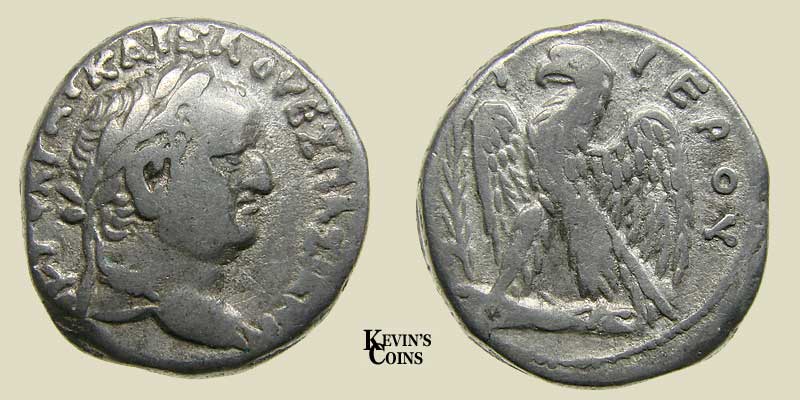
AR Tetradrachm of Vespasian (24mm 15.05g) Struck A.D 70-71 Antioch, Syria
Obv: ΑΥΤΟΚΡΑΤ ΚΑΙΣΑ ΟΥΕΣΠΑΣΙΑΝΟΥ (of Emperor Caesar Vespasian) Laureate head right
Rev: ΕΤΟΥΣ Γ ΙΕΡΟΥ (of year 3, sacred) Eagle standing left on club, palm to left
RPC 1947
ex. Incitatus Coin
This link takes us to a fascinating piece of ancient Roman history! This is a silver tetradrachm, a heavy silver coin minted in the famous ancient city of Antioch (located in modern-day Turkey, but part of the Roman province of Syria back then).
It was made right around AD 70 or 71, which was a massive, chaotic turning point for the Roman Empire. Let's break down exactly what you are looking at on this coin and what it all means!
The Front (Obverse): Meet the Boss
On the front, you see a portrait of a man looking to the right, wearing a laurel wreath on his head.
- Who is he? This is the Emperor Vespasian.
- The Backstory: Just before this coin was made, Rome went through a wild civil war known as the "Year of the Four Emperors" (AD 69). Emperors were getting assassinated left and right. Vespasian was a gritty, no-nonsense general who finally grabbed the throne, stabilized the empire, and started a new family dynasty.
- The Text: The Greek letters around his head spell out AYTOKPAT KAIΣA OYEΣΠAΣIANOY. In English, that translates to: "Of Emperor Caesar Vespasian." Even though it's a Roman coin, it uses Greek because Greek was the main language spoken in the eastern part of the Roman Empire.
The Back (Reverse): Power and Victory
Flip the coin over, and you get some serious Roman propaganda starring a majestic eagle.
- The Design: An eagle is standing proud, looking to the left. Underneath its feet is a heavy wooden club, and right next to it is a palm branch.
- The Symbolism: The eagle was the ultimate symbol of Roman military might and Jupiter (the king of the gods). The club belongs to Hercules, symbolizing strength. The palm branch is a classic symbol of victory.
- The Big Connection: Why celebrate victory in AD 70/71? Vespasian and his son, Titus, had just successfully crushed the massive Jewish Revolt in Judea and destroyed the Second Temple in Jerusalem. This coin was Antioch’s way of celebrating that massive military win and showing loyalty to the new emperor.
- The Text: The letters here read ETOYΣ Γ IEPOY. This translates to: "Of year 3, sacred." This tells us the exact year the coin was stamped—the third year of Vespasian's reign!
|