|
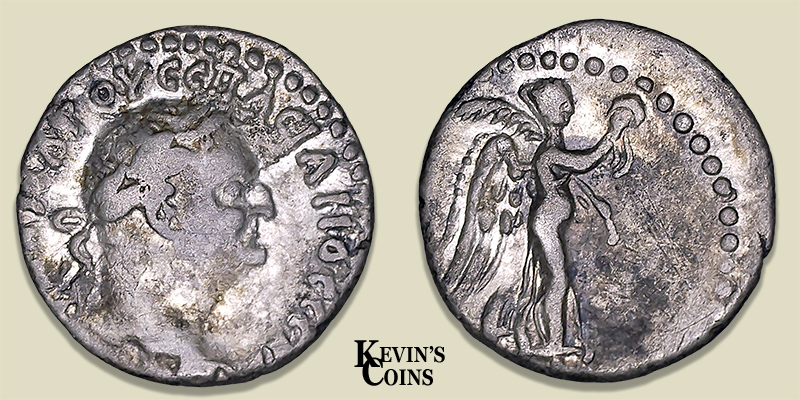
Silver Hemidrachm of Vespasian (13.7mmm 1.42g) struck in Cappodocia, Ceasarea Obv: ΑΥΤΟΚΡ ΚΑΙϹΑΡ ΟΥΕϹΠΑϹΙΑΝΟϹ ϹΕΒΑ, laureate head of Vespasian, right Rev. Nike advancing right, wreath in right hand, palm in left hand RPC II 1659 S 94, Metcalf Conspectus 17, Ganschow 71 ex. Ricky Newhart This little silver coin is a silver hemidrachm minted around 2,000 years ago (between 69 and 79 AD) in Caesarea, a bustling ancient city in the region of Cappadocia (modern-day Turkey). The Front (Obverse): Meet the EmperorOn the front side, you see the profile of Emperor Vespasian, who ruled the Roman Empire at the time. He's rocking a laureate wreath on his head, which was the ancient Roman equivalent of a crown or a massive victory medal. The Greek words wrapping around his head say: ΑΥΤΟΚΡ ΚΑΙϹΑΡ ΟΥΕϹΠΑϹΙΑΝΟϹ ϹΕΒΑ Even though it's a Roman coin, it was minted in a Greek-speaking eastern province, so they wrote the inscription in Greek. It translates to: "Emperor Caesar Vespasian Augustus." Vespasian is famous in history for starting the construction of the Roman Colosseum! He was known as a practical, no-nonsense guy who brought stability back to Rome after a chaotic civil war. The Back (Reverse): Victory is in the AirOn the flip side, you see a winged figure stepping forward to the right. That is Nike, the ancient Greek goddess of victory (and yes, exactly where the sneaker brand got its name!). Look closely at what she's holding:
Why did they make this coin?Putting Nike on the back wasn't just for decoration; it was ancient political propaganda. Vespasian had just taken over the empire after a crazy year where four different emperors fought for the throne. By putting the Goddess of Victory on his coins, he was telling everyone across the provinces: "Hey look, we won, peace is back, and I'm officially in charge!" |
Vespasian Silver Hemidrachm Cappadocia, Caesarea 69-79 AD