
|
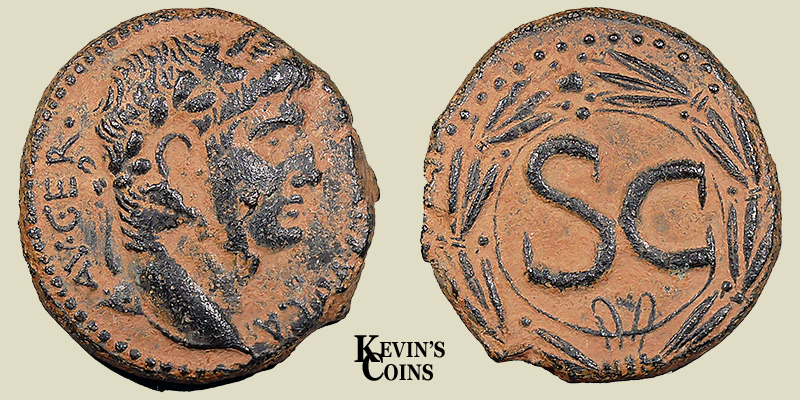
Claudius AE26 (26mm 14.1g) Syria, Antioch AD 41-54 Obv: IM TI CLA CAE AV GER laureate head of Claudius, right Rev: S C inscription within a laurel wreath of eight leaves RPC 4279, BMC 166-7 Suspect "desert patina" This is a Roman Provincial bronze coin minted under the authority of Emperor Claudius in the ancient city of Antioch, Syria. Since it’s a Provincial coin, it wasn't made in Rome for use all over the empire; it was struck locally in Antioch to keep the regional economy moving. It's a chunky little piece of history that tells an interesting story about how Rome projected its power in the East. Here is a breakdown of what the details on this specific coin mean: The Basics
Front Side (Obverse)The front features the profile of Emperor Claudius wearing a laurel wreath, looking to the right. Around his head is a condensed Latin inscription: IM TI CLA CAE AV GER When you unpack the abbreviations, it spells out a massive brag of his official titles:
Back Side (Reverse)The back of the coin is incredibly straightforward but carries a lot of political weight. It features two giant letters surrounded by a wreath made of eight laurel leaves: S C
A Note on the Appearance: "Desert Patina"The page notes a suspect "desert patina." A patina is the colorful crust or layer that builds up on bronze over thousands of years in the dirt. A "desert patina" happens when a coin is buried in dry, sandy soil (like in Syria or Egypt), gluing light-colored sand and clay to the dark metal. It makes the details pop beautifully because the sand sits in the hollows while the high points are dark metal. Because collectors love this look, some modern sellers try to fake it using glue and dust—which is why the collector noted it as "suspect"! |

