|
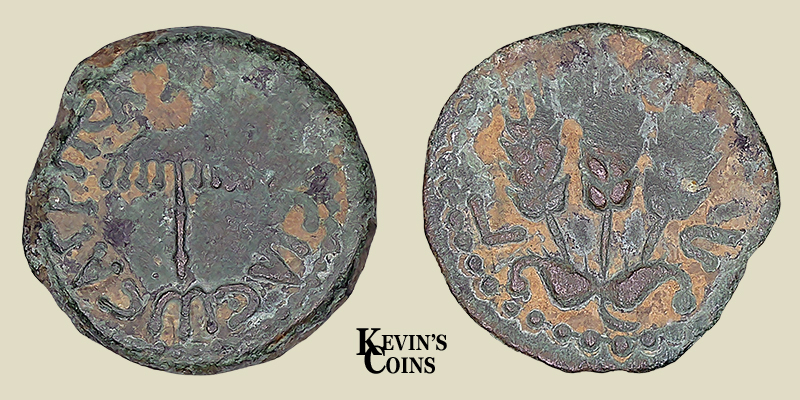
Herod Agrippa AE Prutah (17.3mm, 2.63g) Struck 41-42 AD Jeruselum
Obv: ΒΑϹΙΛΕΩϹ ΑΓΡΙΠΑ Royal umbrella-like canopy with fringes
Rev: Three plump ears of barley or grain growing between two leaves L Ϛ (regnal year 6)
RPC I 4981, Hendin 6274
This is a Prutah, a small bronze pocket-change coin minted under King Herod Agrippa I (the grandson of Herod the Great). He is the very same King Herod mentioned in the Bible (specifically in the Book of Acts).
Even though Judea was under Roman control, the Romans let local kings mint their own small coins for everyday use. What makes this specific coin so cool is how Agrippa managed to walk a tightrope between pleasing his local Jewish subjects and showing off his royal power.
1. The Front (Obverse): The Royal Umbrella
- What you see: A little canopy or umbrella-like structure with fringes hanging down.
- The Greek words: It reads ΒΑϹΙΛΕΩϹ ΑΓΡΙΠΑ (Basileos Agripa), which simply means "Of King Agrippa."
- The Meaning: The umbrella was a symbol of royal luxury and protection in the ancient Near East. Since traditional Jewish law strictly forbade making images of humans or animals (no faces on money!), Agrippa couldn't put his own portrait on coins minted in Jerusalem. The umbrella was his clever workaround—a way to shout, "Hey, I'm the king!" without breaking any religious rules.
2. The Back (Reverse): The Plump Barley
- What you see: Three ears of barley or grain growing upward between two leaves.
- The Code Letters: Look closely for the letters L Ϛ (or L Stigma). In ancient Greek dating, the "L" is a symbol that means "Year," and the "Ϛ" is the number 6.
- The Meaning: This means the coin was struck in the 6th year of Agrippa's reign, which corresponds to 41–42 AD. The barley itself was a great local symbol. It celebrated the agricultural fertility of the land and tied into the annual spring harvest festival (Passover/Shavuot). It was safe, respectful to the Temple culture, and made the coin perfectly acceptable to the locals.
|