
|
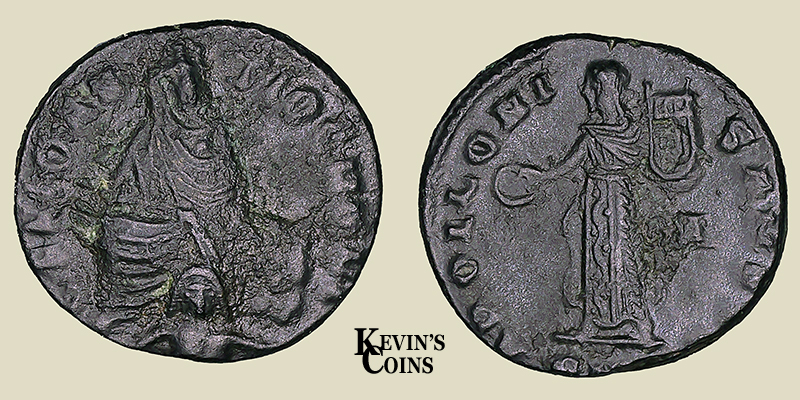
Time of Maximinus II Daia. AE 1/4 Follis (14MM 1.49G) Persecution Series. Antioch AD 310-313 Obv: GENIO AN-TIOCHENI, Tyche of Antioch, turreted, wearing cloak and veil, seated facing on rock; at her feet, river god Orontes swimming right Rev: APOLLONI SANCTO, Apollo standing left holding patera and lyre Vagi 2954 This little coin is an incredible historical artifact. It is a tiny bronze coin (specifically a 1/4 Follis) minted in the ancient city of Antioch (modern-day Turkey) between 310 and 313 AD. Numismatists call this part of the "Persecution Series" (or Civic Series), and it tells a dark but fascinating story about the clash between traditional Roman religion and the rise of Christianity. The Flip Side: Decoding the ImageryUnlike most Roman coins, this one does not feature the face of an emperor. Instead, it features local gods to whip up civic pride and devotion to the old pantheon.
The Historical Backstory: A Final StandTo understand why this coin exists, you have to travel back to the early 4th century. Emperor Maximinus II Daia ruled the eastern part of the Roman Empire, and he fiercely hated Christianity. While Constantine the Great was starting to embrace Christianity in the West, Maximinus Daia decided to double down on the old pagan gods in the East. He launched a targeted, intense propaganda campaign. Instead of forcing people to worship him, Maximinus worked with local city governments (like Antioch) to strike these special, small coins. They. perhaps, served a dual purpose:
The End of an EraThis coin marks the absolute twilight of pagan Rome's dominance. Just a few years later, Maximinus Daia lost a civil war and died in 313 AD. Constantine took full control, legalized Christianity across the empire, and these "Persecution" coins disappeared from circulation forever. It is a pocket-sized reminder of a massive cultural turning point in world history. |

