|
Moesia Inferior Markianopolis AD 218-222
(27mm 13.12g) AE 27
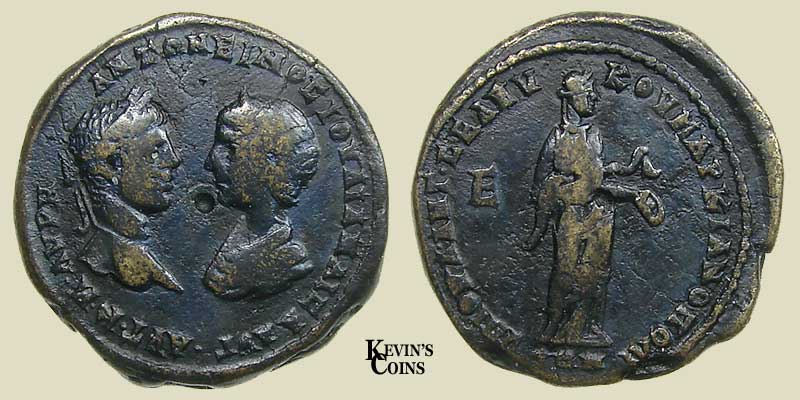
Obv: ΑΥΤ Κ Μ ΑΥΡΗ ΑΝΤΩΝΕΙΝΟϹ ΙΟΥΛΙΑ ΜΑΙϹΑ ΑΥΤ Confronted busts of Elagabalus and Julia Maesa
Rev: VΠ ΙΟVΑ ΑΝΤ ϹΕΛΕVΚΟV ΜΑΡΚΙΑΝΟΠΟΛΙΤΩΝ Hygeia standing right feeding serpent from patera. E in left field.
Moushmov 693. , AMNG 959v
Ex Jerry Coddington
|
The Front (Obverse): A Powerful Family Duo
On the front, you see two faces staring directly at each other (confronted busts):
- The Teen Emperor: On the left is Elagabalus (who ruled from AD 218–222). He became emperor when he was just 14 years old! He is infamous in history for being a wild, eccentric teenage ruler who tried to replace Rome’s traditional gods with a Syrian sun god.
- The Mastermind Grandmother: On the right is Julia Maesa, his grandmother. She was the real power behind the throne! She engineered a military coup to get her teenage grandson into power and practically ran the Roman Empire behind the scenes.
- The Text: The Greek lettering around the edges (ΑΥΤ Κ Μ ΑΥΡΗ ΑΝΤΩΝΕΙΝΟϹ ΙΟΥΛΙΑ ΜΑΙϹΑ ΑΥΤ) translates to titles honoring them: Imperial Caesar Marcus Aurelius Antoninus (Elagabalus's official imperial name) and Julia Maesa Augusta.
The Back (Reverse): Staying Healthy in the Ancient World
Flip the coin over, and you meet a classic Greek deity:
- Hygeia: This is the goddess of health, cleanliness, and hygiene (where we get our word "hygiene"!). She is shown standing up and feeding a giant serpent out of a small dish called a patera. In ancient times, snakes were symbols of healing and rebirth because they shed their skin.
- The "E" Mark: On the left side, there is a distinct Greek letter E. In the Greek numbering system, E equals 5. This tells citizens that the coin is a Pentassarian, meaning it was worth 5 ancient pennies (assaria).
- The Text: The inscription (VΠ ΙΟVΑ ΑΝΤ ϹΕΛΕVΚΟV ΜΑΡΚΙΑΝΟΠΟΛΙΤΩΝ) translates to "Under Julius Antonius Seleucus, [Coin] of the Markianopolitans." Seleucus was the local governor who oversaw the city and authorized the printing of this coin.
Why was this coin made?
Because this is a Roman Provincial coin, it wasn't minted in Rome. Cities in the provinces (like Markianopolis) were allowed to mint their own bronze money for everyday local shopping. Putting the local governor's name on it acted like a signature of authenticity, while plastering the Emperor and his powerful grandmother on the front was a great way to say, "Hey look, we love and support the current royal family!"
|