
|
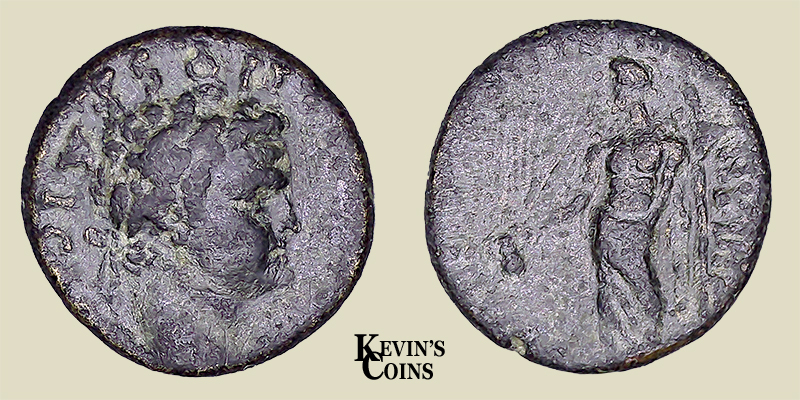
AE17 Domitian (17mm 3.64g) Aeolis, Temnus AD 81-96 Obv: ΔΟΜΙΤΙΑΝΟϹ ΚΑΙϹΑΡ (Domitian Caesar) laureate head of Domitian, right Rev: ΕΠΙ ΔΙΟΝΥϹΟΔΩΡΟΥ ΑΓΝΟΥ ΦΙΛΟΠΑΤΡΙΔΟϹ ϹΤ[ΡΑΤΗ], ΤΗΜΝΙ (under Dionysodoros Hagnos philopatris, strategos of the Temnians) Dionysus standing, left, with cantharus and thyrsus RPC II 980A The Front Side (Obverse): Meet the EmperorOn the front of the coin, you see the profile of Emperor Domitian looking to the right. He is wearing a laurel wreath, which was the ancient Roman version of a crown, symbolizing victory and power. The Greek lettering around him reads: ΔΟΜΙΤΙΑΝΟϹ ΚΑΙϹΑΡ (Domitian Kaisar) What it means: It simply translates to "Domitian Caesar." Because this coin was made in a Greek-speaking region, they spelled his name and title using the Greek alphabet. Calling him "Caesar" was a great way to remind everyone in the province exactly who was boss in Rome! The Back Side (Reverse): Party Time with DionysusThe back of the coin gets a lot more personal to the local city. It features Dionysus, the ancient Greek god of wine, theater, and having a good time, standing and looking to the left. He is holding two very specific items:
The long Greek inscription wrapped around him is a bit of a mouthful: ΕΠΙ ΔΙΟΝΥϹΟΔΩΡΟΥ ΑΓΝΟΥ ΦΙΛΟΠΑΤΡΙΔΟϹ ϹΤ[ΡΑΤΗ], ΤΗΜΝΙ Detailed Meaning of Each Word:
The full sentence means: "Under the magistracy of Dionysodorus, son of Agnos, the Patriot, (this is the coin) of the Temnitai." Ancient cities loved to brag about who was running the show locally. This tells us that a local official named Dionysodoros Hagnos was the Strategos (a high-ranking magistrate or military general) in the city of Temnus when this coin was struck. He even gave himself the title philopatris, which means "patriot" or "lover of his country." Putting Dionysus on the coin was a clever double-play: it honored the god of wine (which the region was famous for making), and it played on the local official's name, Dionysodoros, which literally means "Gift of Dionysus!" The Big PictureThis coin is a perfect snapshot of history. It shows how the Roman Empire functioned by blending cultures. It honors the big-boss Roman Emperor on the front to show loyalty, but keeps its local Greek identity on the back by celebrating a homegrown leader and a favorite local god. |

