|
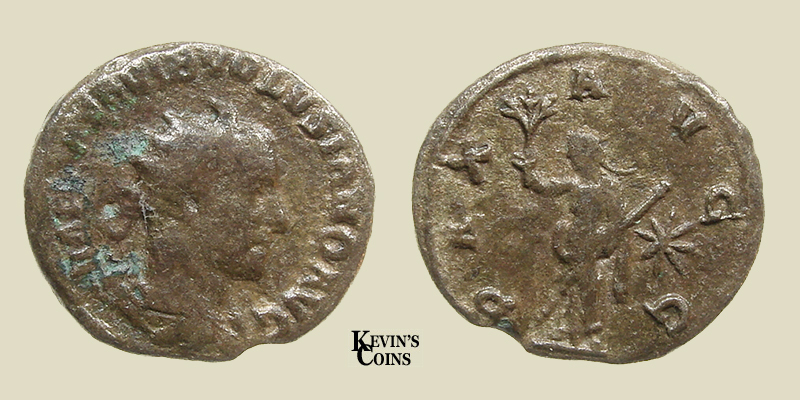
Billon Antoninianus (22mm, 4.7 g) Struck A.D. 251-253 Rome
Obv: IMP CAE C VIB VOLVSIANO AVG Radiate, draped bust right
Rev: PAX AVGG, Pax standing left, holding branch and transverse sceptre, star in right field
RIC 180 RSC 71, Sear 9758
ex. Davis Ancients
The Front (Obverse): The Emperor's Image
- The Portrait: You see Volusian wearing a spikey, crown-like headpiece. This is a radiate crown, which was the ultimate visual indicator that this coin was an Antoninianus (worth double the value of a standard denarius). It also linked the emperor to the sun god, Sol, symbolizing power and illumination.
- The Text: IMP CAE C VIB VOLVSIANO AVG
- This stands for Imperator Caesar Caius Vibius Volusianus Augustus.
- Translated, it means: "Commander Caesar Caius Vibius Volusianus, Supreme Ruler." It’s a massive flex of his official military and imperial titles to make his fragile rule look legitimate.
The Back (Reverse): The Political Propaganda
- The Image: A figure standing and holding an olive branch (the universal sign of peace) and a long scepter. This is Pax, the Roman goddess of peace.
- The Text: PAX AVGG
- This stands for Pax Augustorum, which translates to "Peace of the Emperors."
- Notice the double 'GG' at the end of AVGG. In Roman text, doubling a letter meant it was plural. It explicitly reminds everyone that there are two emperors (Volusian and his dad, Trebonianus Gallus) ruling together in perfect harmony.
- The Star: There's a little star stamped into the background. In Roman minting, these little marks were often used like security codes or batch numbers to show which specific workshop (officina) in Rome made the coin.
The Irony & Context (Why it matters)
What makes this coin fascinating is the huge gap between what the coin promised and what was actually happening:
- Fake Peace: The coin screams "PEACE!", but Volusian's reign was a nightmare. Rome was dealing with a massive plague (the Plague of Cyprian), invasions from Gothic tribes, and constant civil unrest.
- Fake Silver: The coin is described as Billon, which is a polite way of saying "mostly copper with a tiny splash of silver washed over the top." Rome's economy was failing, so the government kept watering down the currency.
- A Grim End: The "Peace of the Emperors" lasted less than two years. In 253 A.D., a rival general rebelled, and Volusian and his father were assassinated by their own stressed-out soldiers.
|


