
|
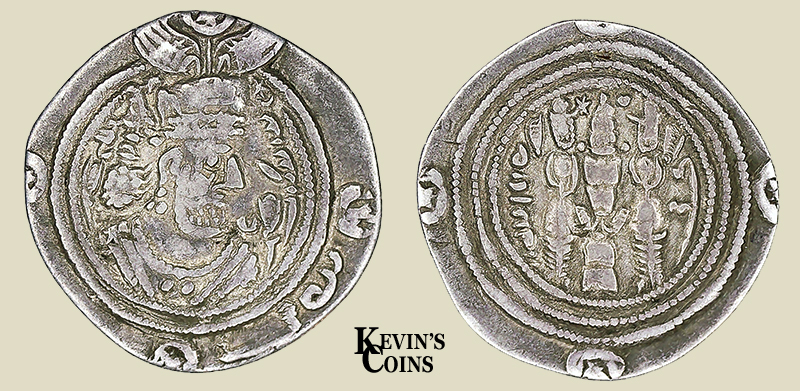
Ancient Persia, Sasanian Kingdom Silver Dirhem (28mm 2.73g) King Khusro II AD 590-627 Obv: Crowned bust of Khruso II right . His name in script in right, royal motto on left. Rev: Zoroastrian fire altar with 2 attendants. Regnal year (25?) in left field, mint mark on right This coin is a silver dirham (often spelled drachm) from the Sasanian Empire, which was the last great Persian empire before the rise of Islam. It features King Khusro II (also known as Chosroes II), who ruled from AD 590 to 627. He was nicknamed Parvez, which means "The Victorious," and his reign was an absolute roller coaster of epic triumphs and ultimate disaster. Here is the fun historical story behind the coin you are looking at! The King on the Front: Khusro II’s Wild RideWhen Khusro II first came to power in AD 590, things went sideways immediately. A powerful general rebelled and stole his throne. Khusro actually had to flee to his bitter enemies, the Byzantine (Eastern Roman) Empire, to ask for help. The Byzantine Emperor, Maurice, gave Khusro an army to win back his Persian throne. In return, Khusro promised peace. For about a decade, the two rival empires enjoyed a rare moment of friendship. But in AD 602, Emperor Maurice was murdered in a palace coup. Khusro II used this as the perfect excuse to launch a massive revenge war against Rome. He conquered Egypt, Syria, and Jerusalem, and his armies even reached the walls of Constantinople. Under Khusro II, the Persian Empire grew to its biggest size in centuries. The Art on the Coin: Crowns and FireSasanian coins are famous for being super thin, wide, and incredibly detailed. They tell us exactly what mattered to these ancient rulers:
The Downfall and the End of an EraWhile this silver dirham was being minted and traded across the Silk Road, Khusro’s luck was running out. The Romans launched a massive counter-offensive led by Emperor Heraclius. They marched right into the Persian heartland, destroying Khusro's palaces. Terrified and furious, the Persian nobles turned on Khusro II. In AD 628, his own son locked him in a dungeon and had him executed. The endless wars completely exhausted both the Persian and Roman empires. Just a few years after Khusro II died, Arab armies swept out of the Arabian Peninsula. The weakened Sasanian Empire couldn't hold them off and collapsed entirely by AD 651. A Cool LegacyEven though the empire fell, these silver coins were so trusted for their high-quality silver that the early Islamic caliphs kept using the exact same design! For decades, early Islamic coins looked just like this Sasanian dirham, sometimes with just a small Arabic phrase stamped onto the margin. |

