|
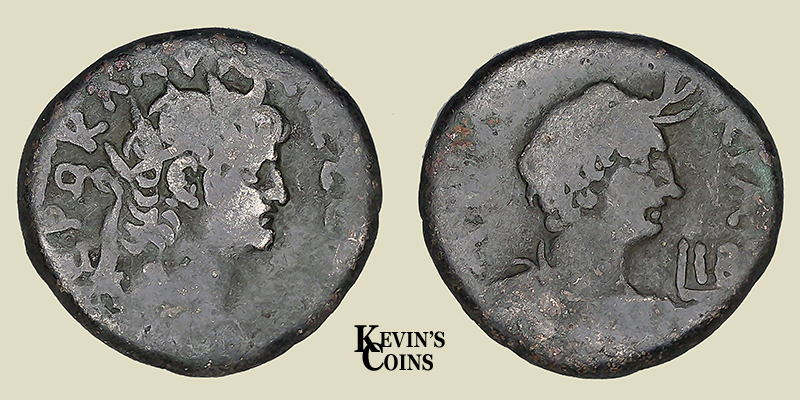
Nero Billon Tetradrachm (24mm 13.18g)
Alexandria, Egypt AD 65-66
Obv: ΝΕΡΩ ΚΛΑΥ ΚΑΙΣ ΣΕΒ ΓΕΡ ΑΥ Radiate bust right, wearing aegis
Rev: AYTOKPA Draped bust of Alexandria right in elephant skin headdress, LIB (RY 12) to right
Emmett 109, RPC 5289
|
The Obverse (Front): Nero's Power Play
On the front, you have a stark portrait of the emperor himself, looking quite substantial. Nero's portraiture notoriously grew heavier and more elaborate as his reign progressed.
- The Crown: He is wearing a radiate crown (the spiked rays extending from his head). While Roman emperors generally avoided looking like literal gods in Rome itself to keep the Senate happy, Egypt was a completely different story. To the Egyptian populace, the radiate crown explicitly linked Nero to the sun god, Helios/Ra.
- The Armor: If you look closely at the base of his neck, he is wearing an aegis—a magical protective cloak or collar associated with Zeus and Athena, often decorated with a Gorgon's head or snake scales. It screamed divine protection and supreme military authority.
- The Inscription: ΝΕΡΩ ΚΛΑΥ ΚΑΙΣ ΣΕΒ ΓΕΡ ΑΥ. Translated from Greek (the administrative language of Roman Egypt), this reads: Neron Klau[dius] Kais[ar] Seb[astos] Ger[manikos] Au[toukrator]. This translates directly to: Nero Claudian Caesar Augustus Germanicus Imperator.
The Reverse (Back): A Love Letter to Alexandria
The back of this coin features a beautiful personification of the city of Alexandria itself, personified as a woman. This imagery wasn't just decorative; it was a clever political move. Nero was incredibly popular in Greece and Egypt because he loved Hellenistic culture, and he actually planned a grand royal tour to Alexandria around this exact time (though events in Rome eventually forced him to cancel it).
- The Headdress: Alexandria is depicted wearing an elephant skin headdress (you can see the snout and tusks draped over her head). This was a traditional symbol of Africa and Alexandria's dominance over the rich trade routes extending into the continent, originally popularized by the Ptolemaic kings who ruled before Rome took over.
- The Date: To the right of her face, you see the letters L ΙΒ. The "L" is an ancient Egyptian symbol meaning "Regnal Year," and ΙΒ is the Greek numeral for 12. This explicitly dates the coin to Nero’s 12th year on the throne, which anchors it perfectly to AD 65–66.
- The Inscription: ΑΥΤΟΚΡΑ. This is short for Autokrator, the Greek translation of "Imperator" (one who holds absolute supreme command).
Why the Metal Looks the Way It Does
This coin is made of billon, which is essentially a low-grade silver alloy. Rome treated Egypt as a strictly closed economy. Regular Roman denarii were banned from circulating there. Instead, the mint at Alexandria melted down old silver, mixed it heavily with copper (often leaving it at only around 15–20% pure silver), and struck these thick tetradrachms. This kept Egypt’s massive agricultural wealth tied tightly to the emperor's personal pocketbook!
|