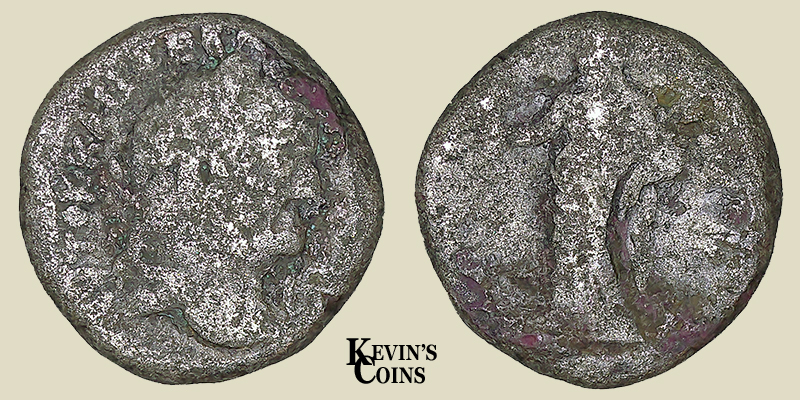
Vespasian Billon Tetradrachm Alexandria, Egypt AD 70-71


Vespasian Billon Tetradrachm (23mm 8.1g)
Alexandria, Egypt AD 70-71

ObvAYTOK KAIΣ ΣEBA OYEΣΠAΣIANOY Laureate head right, LΓ before (year 3)

Rev: EI PH NH Eirene standing left, holding branch and caduceus

Emmett 203 Milne 405, RPC II 2422

The Obverse (Front): A No-Nonsense Emperor

Take a look at the portrait of Vespasian. The contrast with Nero couldn't be more striking. Gone are the dramatic, stylized, god-like flowing locks and theatrical features.

  • The Look: Vespasian is depicted as a stern, unpretentious, aging military man with a receding hairline and deeply lined features. This was a deliberate artistic choice called verism (hyper-realism). It told the Roman world: "The days of the spoiled, artistic boy-king are over. A competent, mature adult is in charge now."
  • The Inscription: ΑΥΤΟΚ ΚΑΙΣ ΣΕΒΑ ΟΥΕΣΠΑΣΙΑΝΟΥ. Translated from Greek: Autok[rator] Kais[ar] Seba[stos] Ouespasianou (Imperator Caesar Augustus Vespasian).

The Reverse (Back): The Ultimate Political Promise

The reverse design is a beautiful image of Eirene, the personification of Peace (the Roman Pax).

  • The Imagery: Eirene stands facing left, wearing traditional robes. In her right hand, she holds a laurel branch, a classic ancient symbol of victory and peace. Tucked in her left arm, she cradles a cornucopia (horn of plenty), overflowing with fruits and grain.
  • The Date Code: Just in front of her feet, you will see the letters L Γ. The L is our familiar Egyptian symbol for "Regnal Year," and Γ is the Greek numeral 3. Because the Egyptian calendar rolled over its new year every August, Vespasian’s Year 3 ran from August AD 70 to August AD 71.
  • The Symbolism: This imagery was pure genius for a war-weary empire. The message to the people of Egypt and Rome was loud and clear: "Under my rule, civil war is over. Peace (Eirene) has been restored by victory, and with that peace comes prosperity and abundance (the cornucopia)."

The Ultimate Flavian Connection

The timing of this coin issue (AD 70–71) matches up perfectly with one of the most famous events in Roman history. In the summer of AD 70, Vespasian’s son, Titus, successfully captured Jerusalem, ending the First Jewish-Roman War.

When Titus returned to Rome in AD 71, he and Vespasian celebrated a massive joint triumph. To permanently cement this victory and the end of the civil wars, Vespasian used the spoils of the war to build the spectacular Templum Pacis (Forum of Peace) in Rome.

This little billon tetradrachm from Alexandria is a direct, local echo of that grand imperial celebration—a piece of pocket-change minted to tell ordinary citizens that the world was finally safe, stable, and open for business again under the steady hand of the Flavians.

Site hosted free courtesy of VCoins.com
Ancient Coins on Vcoins

Untitled 1

In an effort to spare you my horrible grammar and spelling, I use artificial intelligence to assist in content creation.

Visit My Blog

logo

Email Kevin

*