|
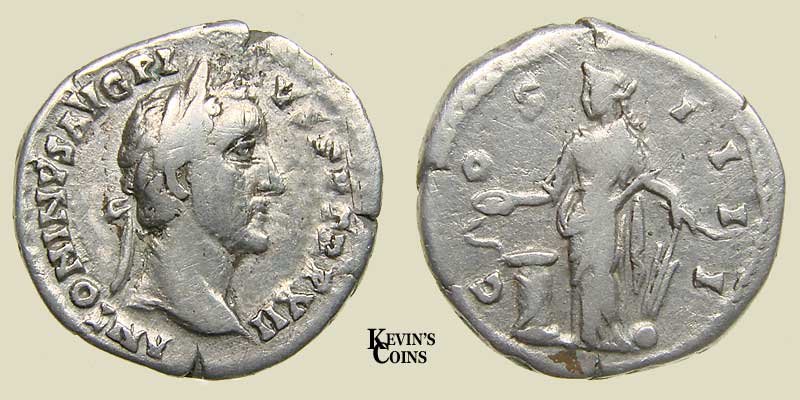
Silver Denarius (18mm 3.13g) Struck AD 148-149 Rome
Obv:ANTONINVS AVG PIVS P P TR P XII Laureate bust right
Rev: COS III Salus standing facing, head left, holding patera and rudder on globe, feeding a serpent entwined around an altar
RIC III 181 Sear 4075
ex. Dirty Old Coins
|
The Front (Obverse): The Emperor's Resume
The front features a detailed portrait of Antoninus Pius wearing a laurel wreath. The Latin letters wrapping around him are a giant string of titles, abbreviations, and milestones:
- ANTONINVS AVG PIVS: Antoninus Augustus Pius. "Augustus" means emperor, and "Pius" was a special nickname given to him because he was incredibly dutiful, kind, and loyal to his family and the gods.
- P P: Pater Patriae, meaning "Father of the Country."
- TR P XII: Tribunicia Potestate XII. This means he was holding the powerful position of Tribune for the 12th time. Because emperors renewed this power every year, this tells historians exactly when the coin was made: the 12th year of his reign (AD 148–149).
The Back (Reverse): Peace, Health, and Safety
The back of the coin sends a massive message of reassurance to the Roman public. It shows Salus, the Roman goddess of health, safety, and public welfare, and it is packed with symbolic imagery:
- COS III: Consul III. This notes that the emperor was serving his third term as consul (one of the highest political offices in Rome).
- The Altar and the Snake: Salus is shown holding a small dish called a patera, using it to feed a snake that is slanting up from a sacrificial altar. To modern eyes, a snake might look scary, but to Romans, snakes were symbols of healing, rebirth, and medicine.
- The Rudder on the Globe: In her other hand, Salus holds a ship's rudder resting on top of a globe. This is pure political messaging: it tells the citizens that under the emperor’s guidance, the "ship of state" is being steered safely, bringing health and stability to the entire known world.
When a Roman held this silver coin, they were meant to feel a deep sense of security. It reminded them that their dutiful, wreath-wearing emperor was working hand-in-hand with the gods to keep the empire healthy, wealthy, and perfectly on course.
|