
|
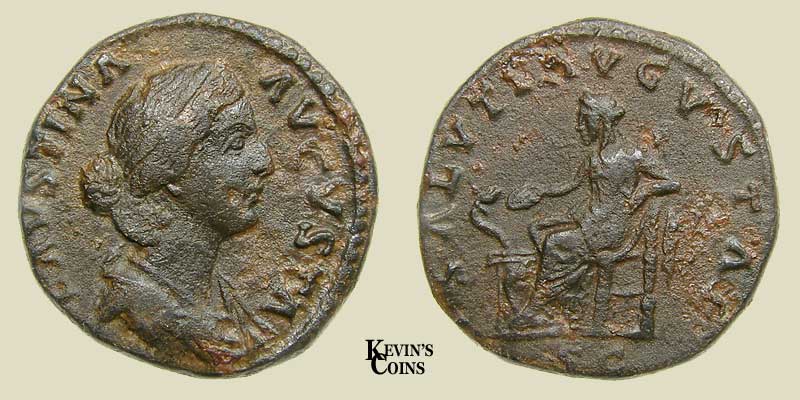
Copper As (24mm 11.94g) Struck AD 161-175 Rome Obv: FAVSTINA AVGVSTA Bust wearing circlet, right Rev: SALVTI AVGVSTAE Salus seated left, feeding snake twined around altar RIC III 1671, Sear 5303 This is a beautiful piece of ancient Roman history! It is a bronze coin called an As (plural: Asses), which was a daily pocket-money coin used by ordinary Romans to buy things like bread, wine, or baths. This specific coin was minted in Rome sometime between AD 161 and 175 to honor Faustina the Younger, one of the most famous and powerful empresses in Roman history. Here is a breakdown of what the coin is telling us! The Front (Obverse): Meet the EmpressThe front of the coin features a detailed profile portrait of Faustina the Younger facing to the right.
The Back (Reverse): A Prayer for Good HealthThe back of the coin sends a very specific message about health, safety, and well-being. It features a woman sitting down, feeding a pet snake that is wrapping itself around a small altar.
Putting the Pieces Together: Why was it made?Roman coins were like the newspapers or social media feeds of the ancient world. The Emperor used them to blast political messages, propaganda, or celebrations across the entire empire. Because Faustina had so many children and frequently traveled to rugged military frontiers with her husband, her health was a major public concern. When she fell ill, or conversely, when she successfully recovered from a rough sickness or a difficult childbirth, the mint in Rome would strike coins like this one. It was their way of saying to the Roman people: "Good news, everyone! The gods have answered our prayers, and our beloved Empress Salus is keeping Faustina safe and healthy!" |

