
Barbarous Coinage
| Barbarous coinage refers to unofficial imitations of Roman coins, typically produced in frontier regions or beyond the Empire’s formal borders. These coins were often created by local populations who lacked access to official mints but still relied on Roman currency for trade. While the term “barbarous” reflects the Roman perspective on non-Roman peoples, the coins themselves provide valuable insight into cultural and economic exchange. Most barbarous coins imitate familiar Roman types, especially those of the 3rd and 4th centuries CE, when political instability and coin shortages were common. They often copy the portraits of emperors and standard reverse designs but in a crude or stylized manner. Legends may be blundered, abbreviated, or entirely nonsensical, suggesting that the engravers were replicating shapes rather than reading Latin. These imitations circulated alongside official issues and were likely accepted based on weight and appearance rather than strict authenticity. In some cases, they filled a genuine need for small change in regions underserved by imperial mints. |
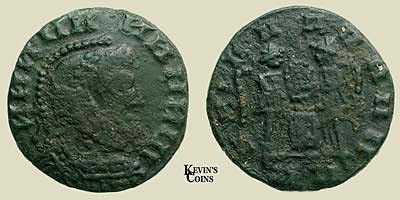
AE 4 16mm 2.18g
Obv: Helmeted, draped, and cuirassed bust right
Rev: Two victories placing sheild on altar
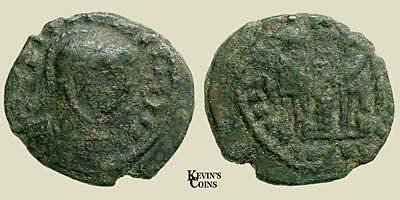
AE 3 17mm 3.29g
Obv: Helmeted, draped, and cuirassed bust right
Rev: Two victories placing sheild on altar
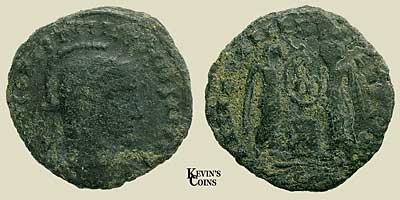
AE 3 18mm 2.91g
Obv: Helmeted, draped, and cuirassed bust right
Rev: Two victories placing sheild on altar
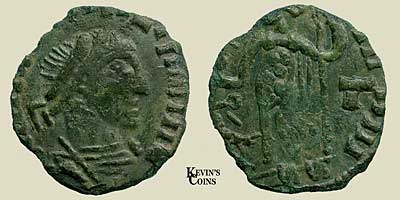
AE4 13.8mm .98g
Obv: laureate & cuirassed bust right
Rev: Figure (Jupiter?) stg facing, head lt, chlamys over lt shoulder, scepter in lt hand, figure (victory?) in rt. Eagle with wreath by feet
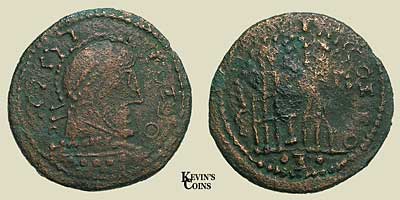
AE3 18mm 2.44g
Obv: Helmeted and cuirassed bust right
Rev: Two figures, perhaps Victory on right crowning emperor on left?

