|
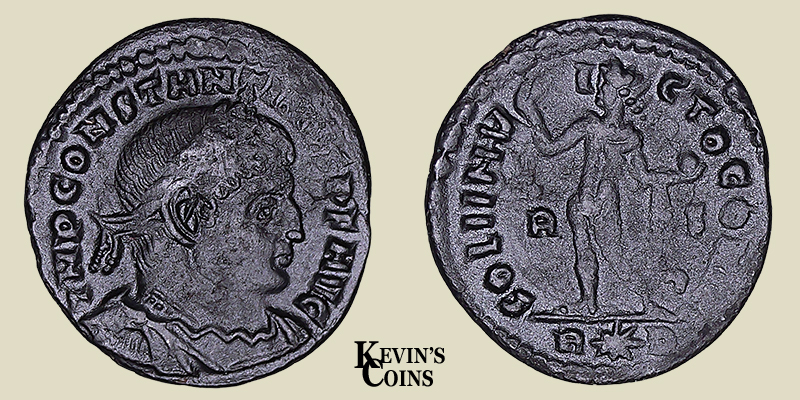
Billon Follis (18.8mm, 3.05g) Struck AD 314 Rome
Obv: IMP CONSTANTINVS P F AVG Laureate. draped, and cuirassed bust right
Rev: SOLI INVICTO COMITI Sol Invictus standing left, holding globe, raising right hand, chalmys over left shoulder R in left field F in right R*Q in exergue
RIC VII Rome 19, Sear 16096
ex. Ancient Resource, ex. CNG
The Front (Obverse) — The Emperor's Selfie
- The Picture: You see a portrait of Constantine looking to the right. He is wearing a laurel wreath on his head (the ancient version of a crown) and is dressed in military armor (a cuirass) with an official cloak draped over his shoulders.
- The Text: IMP CONSTANTINVS P F AVG
- What it means: This is standard imperial shorthand for Imperator Constantinus Pius Felix Augustus. Translated, it means "Commander Constantine, Dutiful and Wise, Supreme Ruler." It was the ultimate ancient power statement!
The Back (Reverse) — The Sun God
- The Picture: A figure stands naked except for a cloak draped over his shoulder. He is raising his right hand in a blessing and holding a globe in his left. This is Sol Invictus, the Invincible Sun God.
- The Text: SOLI INVICTO COMITI
- What it means: "To the Invincible Sun, my Companion." By putting Sol on his coins and calling him his "companion," Constantine was telling the public, "The ultimate sun god is my personal buddy and protector, which means my rule is completely blessed."
- The Secret Mint Letters: You'll see random letters like R and F in the background, and R*Q stamped at the very bottom (the exergue). These were anti-counterfeiting tracking codes. R stands for the Rome mint, and Q stands for Quarta, meaning it was made in the fourth workshop of that mint.
Why this coin is historically interesting
Even though Constantine is famous today as the first Roman emperor to convert to Christianity, this coin shows he didn't change the empire's religion overnight!
In AD 314—just a year after he co-signed the famous Edict of Milan to legalize Christianity—he was still heavily using traditional pagan sun-worship imagery to unify his people. Sol Invictus was incredibly popular with the Roman army, so keeping Sol on the payroll via pocket change was a genius political move to keep his soldiers happy while he slowly shifted the empire in a new direction.
|