|
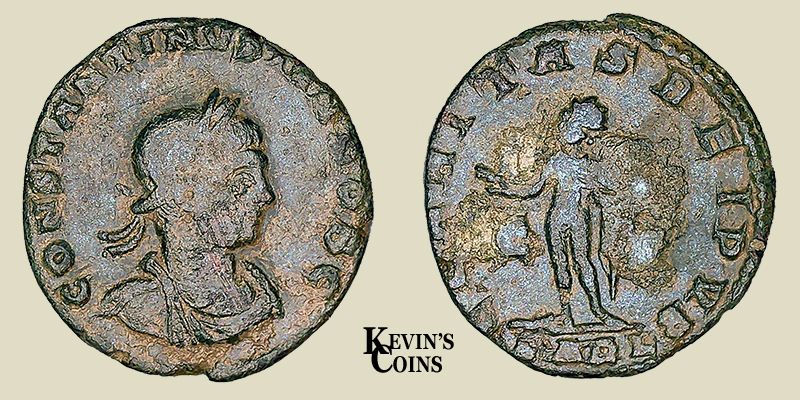
Billon Reduced Follis (18mm 2.13g) Struck AD 317-318 Arelate
Obv: CONSTANTINVS IVN NOB C Laureate, draped, and cuirassed bust right
Rev: CLARITAS REIPVB Sol std l, chlamys around l shoulder, globe in left hand, raising rt. C in left filed, S in rightSARL in exergue
RIC VII 141 Sear 17098
The Front (Obverse)
- The Image: You see a portrait of a young man looking right. He is wearing a laurel wreath (the ultimate Roman symbol of victory) and military armor (cuirass and draped chlamys cloak).
- The Latin Text: CONSTANTINVS IVN NOB C
- What it means: Short for Constantinus Junior Nobilissimus Caesar. It translates to: "Constantine Junior, Most Noble Caesar." (In ancient Rome, "Caesar" meant he was a prince or junior ruler, not the big boss emperor yet).
The Back (Reverse)
- The Image: This features the Roman sun god, Sol. He is standing there looking left, wearing his signature cloak (chlamys) over his shoulder. He is holding a globe in his left hand (symbolizing dominion over the world) and raising his right hand in a powerful greeting or blessing.
- The Latin Text: CLARITAS REIPVB
- What it means: Short for Claritas Reipublicae, which means "The Radiance/Glory of the Republic." The Romans were using the bright, powerful image of the sun to say their empire was in a glorious golden age.
- The Letters at the Bottom: SARL
- What it means: This is the exergue or mint mark. It stands for Signata Arelate, telling us the coin was stamped in the city of Arelate (modern-day Arles in southern France).
Why is this coin special?
It captures a very specific moment in history when the Roman Empire was moving toward Christianity, but still heavily using old Pagan imagery like the Sun God. Plus, it serves as a piece of imperial propaganda used to celebrate a brand-new baby prince!
|