
|
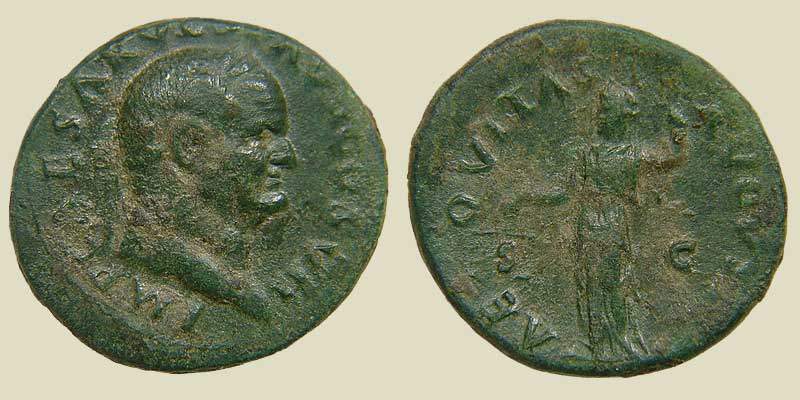
Copper AS (28mm 11.32g) Struck 76 A.D. Obv: IMP CAESAR VESP AVG COS VII Laureate bust right Rev: AEQVITAS AVGVST S C Aequitas standing left, holding rod and scale. RIC II 580a |
|
Let's break down exactly what you are looking at on both sides of this ancient piece of pocket change. The Front (Obverse)The front features the side profile of Emperor Vespasian wearing a laurel wreath. Around his portrait is a ring of compressed text that acts like a billboard for his achievements.
The Interpretation: Vespasian came to power after a messy civil war (the "Year of the Four Emperors"). By plastering his face on money with titles like Imperator (successful military general) and Augustus (the revered ruler), he was reminding everyone, "Hey, I'm the guy in charge, and I've got the army backing me." The COS VII means he was elected as a Consul (Rome's top political office) for the seventh time. This tells historians the coin was made in 76 A.D., because that was the year of his seventh consulship! The Back (Reverse)The back features a standing goddess holding a balance scale in one hand and a measuring rod (or staff) in the other.
The Interpretation:
It is a fantastic little piece of ancient history that shows exactly how a Roman emperor used everyday coins to broadcast a message of stability, fairness, and absolute authority to the public! |

