|
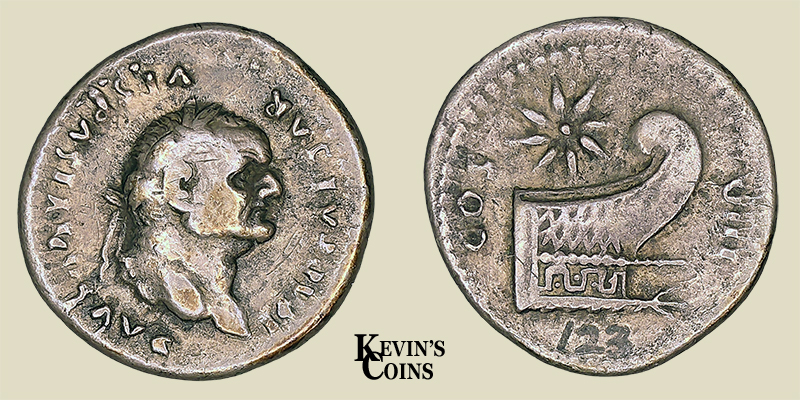
Silver Denarius(18mm 3.21g) Struck A.D. 77-78 Rome
Obv: IMP CAESAR VESPASIANVS AVG Laureate head right
Rev:COS VIII Prow right, large start above. Old ink collectors mark in exergue (123)
RIC II 108, Sear 2290
ex. York Coins
You are looking at a Silver Denarius, a standard silver coin used in daily life across the Roman Empire. This specific coin was minted in Rome between 77 and 78 A.D. under the authority of the Emperor Vespasian.
Let's break down exactly what you are seeing on both sides of the coin and explore what it all means.
The Frontside (Obverse)
The front features a portrait of the emperor himself.
- The Image: You can see the profile of Vespasian facing right. He is wearing a laurel wreath on his head, which was the ultimate Roman symbol of victory, honor, and imperial power.
- The Text (Inscription): Around the edge, it reads IMP CAESAR VESPASIANVS AVG.
- IMP stands for Imperator, meaning a victorious military commander.
- CAESAR was a title adopted by Roman rulers to link themselves back to the fame of Julius Caesar.
- VESPASIANVS is his actual name, Vespasian.
- AVG stands for Augustus, a title meaning "revered" or "majestic," which officially marked him as the top ruler.
The Backside (Reverse)
The flip side of the coin tells a story about what was happening in Rome at the time.
- The Image: It features the prow (the front nose) of a galley ship pointing to the right, with a large star floating right above it.
- The Text (Inscription): It reads COS VIII. This is short for Consul VIII, meaning Vespasian was serving his eighth annual term as Consul, one of the highest political offices in Rome. This specific detail is a goldmine for historians because it allows them to date the coin precisely to 77–78 A.D.
- The Secret Mark: The notes mention a little ink mark that says (123) at the very bottom (the exergue). That isn't from ancient Rome! It's a hand-written mark from an old-school coin collector or museum cataloger from decades or centuries ago.
What is the backstory of this coin?
To fully appreciate this coin, you have to look at the man who minted it and the symbols he chose.
Vespasian wasn't born into a fancy noble family. He was a gritty, practical military general who climbed his way to the top. He came to power after a chaotic, bloody civil war known as the "Year of the Four Emperors." Rome was a total mess, and Vespasian’s main job was to stabilize the empire, fix the economy, and show everyone that the good times were back. (Fun fact: He's the emperor who started building the famous Roman Colosseum!)
So, why put a ship's prow and a star on a coin? It was pure political messaging!
- Naval Victories: The ship's prow was a classic Roman shorthand for naval power. Vespasian and his sons had won major military campaigns (including securing Egypt and putting down rebellions in Judea), and shipping lanes were vital for bringing grain to feed the citizens of Rome. The ship represents safety, security, and global dominance.
- A Bright New Era: The star above the ship is a symbol of guidance, good fortune, and cosmic approval. It was Vespasian's way of telling the public, "The stormy days are over. Under my rule, a bright new star is guiding Rome to peace and prosperity."
It's amazing to think that almost 2,000 years ago, a Roman citizen might have used this exact silver coin to buy dinner or pay their taxes, all while looking at the face of the man rebuilding their world!
|