|
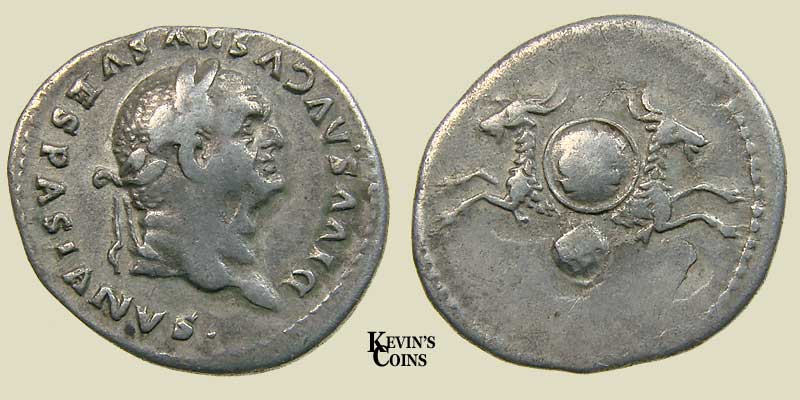
Silver Denarius (19mm, 3.09g) Struck A.D. 80 Rome
Obv: DIVVS AVGVSTVS VESPASIANVS Laureate head right
Rev: S C on circular sheild supported by two capricorns, back to back, globe below
RIC II 63 (Titus) Sear 2569
ex. Harry Stewart Collection, ex. Geary?
|
|
This coin tells an awesome story about family, power, and how ancient Roman emperors basically tried to turn their dead dads into gods!
The coin is a silver denarius (the everyday silver coin used by the Romans). Let's break down exactly what you are looking at on both sides and why it was minted.
The Big Picture: Who and When?
Even though this coin features the name and face of the Emperor Vespasian, it wasn't actually made while he was alive. Vespasian died in 79 AD.
His son, Titus, took over the throne and minted this coin in 80 AD to honor his late father. It is part of what historians call a "consecration" or "deification" issue—a special run of coins celebrating the dead emperor's upgrade to a god.
The Front Side (Obverse)
- What you see: A profile portrait of Vespasian looking to the right, wearing a laurel wreath (the classic Roman symbol of victory).
- The Text: DIVVS AVGVSTVS VESPASIANVS
- What it means: DIVVS is the magic word here. It means "Divine" or "Deified." The inscription literally translates to "The Divine Augustus Vespasian." By putting this on the coin, Titus was telling the whole Roman world: "Hey everyone, my dad is officially a god in Elysium now!" (And by extension, it meant Titus was the son of a god, which was a huge political flex).
The Back Side (Reverse)
- What you see: Two capricorns (the mythical sea-goat creature with the front of a goat and the tail of a fish) sitting back-to-back. They are holding up a round shield between them, and right below them is a globe.
- The Text: S C
- What it means:
- The Capricorns & The Globe: The capricorn was the astrological birth sign of Rome's very first and most beloved emperor, Augustus. By using Augustus's personal symbol on Vespasian's coin, Titus was saying, "My dad was just as great, just as legitimate, and just as important to Rome as Augustus was." The globe represents the Roman Empire's power over the known world.
- The Shield: This represents a clipeus virtutis (a shield of virtue), an honor awarded for bravery and saving citizens.
- S C: This stands for Senatus Consulto, meaning "By Decree of the Senate." It shows that the Roman Senate gave their official rubber stamp of approval to declare Vespasian a god and mint this coin.
|