
|
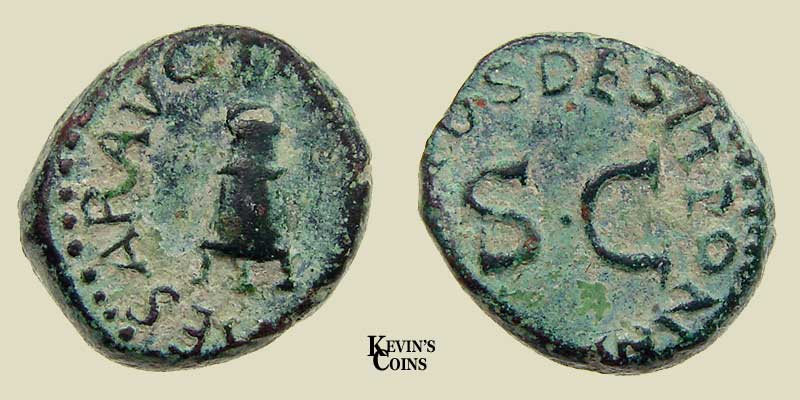
Copper Quadrans (15mm 3.99g) struck AD 41 Rome Obv: TI CLAVDIVS CAESAR AVG Legend around modius Rev: PON M TR P IMP COS DES IT Legend around S C RIC I 84 Sears 1863 |
|
This coin is a copper quadrans minted in Rome in 41 AD, the very first year of the Emperor Claudius’s reign. The quadrans was the smallest denomination of Roman currency—essentially the pocket change or "penny" of the Roman world, used by everyday citizens for basic transactions like buying a loaf of bread or paying entry to the public baths. Even though it is a small, low-value coin, it carries a ton of historical drama and political strategy from a wild turning point in Roman history! 1. The Chaos of 41 AD: Claudius’s Surprise RiseTo understand why this coin looks the way it does, we have to look at how Claudius became emperor. In January of 41 AD, Rome was recovering from the tyrannical reign of Caligula (Claudius's nephew). Caligula was assassinated by his own bodyguards, the Praetorian Guard. In the ensuing chaos, the guards found Claudius—who was 50 years old, had a limp and a stutter, and had been largely ignored and mocked by his family—hiding behind a curtain in the imperial palace. Instead of killing him, the Praetorian Guard declared him emperor. The Roman Senate was furious and wanted to restore the old Republic, but Claudius had the backing of the military. He paid the guards a massive bonus (donativum) to secure their loyalty, effectively buying his way onto the throne. 2. The Imagery: What the Coin CommunicatesBecause his path to power was so shaky, Claudius immediately used currency to legitimize his rule and calm the public.
3. The Titles: Proving He BelongsThe inscriptions around the edge of the coin read like a political resume designed to build respect:
SummaryThis little copper coin is a snapshot of an emperor trying to steady a rocking ship. By putting a simple grain bucket on Rome's pocket change, Claudius sent a clear, comforting message straight to the pockets of his poorest citizens: stability, food, and tradition are back. |

