
|
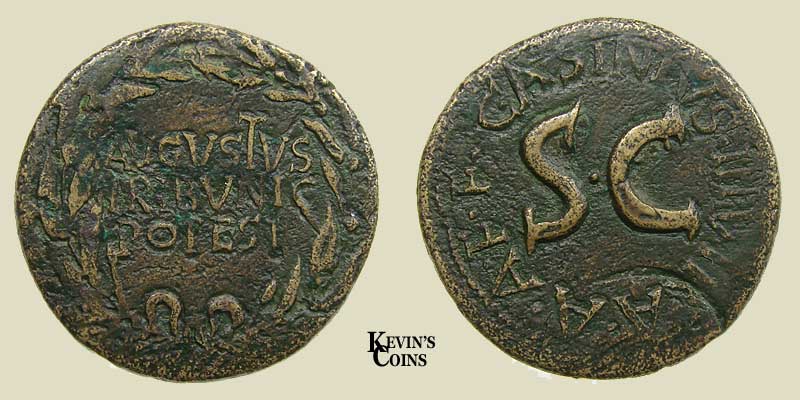
Augustus Obv: AVGVSTVS TRIBVNIC POTEST Legend in oak wreath Rev: C . ASINIVS IIIVIR A A A F F around S C c.f. RIC 372 cf. Sear RCV 1659 |
|
This coin dates to 18 BC, a pivotal moment in the early Roman Empire when Augustus was actively re-shaping the Roman monetary system and carefully balancing the appearance of Republican tradition with the reality of autocratic rule. 1. The Monetary Reform: The Rise of OrichalcumOne of the most significant aspects of this coin is the material: orichalcum (a high-quality brass alloy). Before this period, Roman coinage was primarily silver or copper. Augustus introduced a new, standardized system where the face value of the coins was tied to the metal used:
Augustus granted the Senate the nominal authority to mint these base metal coins. This is why the reverse of your coin prominently displays the letters S C (Senatus Consulto—"by decree of the Senate"). It was a clever political gesture: by letting the Senate "issue" the bronze coinage, Augustus gave the illusion that the old Republic was still functioning, even though the mint was effectively under his control. 2. The Moneyer: C. Asinius GallusThe name on the reverse, C. ASINIVS IIIVIR A A A F F, refers to the official responsible for the minting, Gaius Asinius Gallus. The title IIIVIR A A A F F stands for Triumvir Auro Argento Aere Flando Feriundo—"One of the Three Men for Casting and Striking Gold, Silver, and Bronze." This office was a vestige of the Republic. Under Augustus, the position of "moneyer" (someone in charge of the mint) became a high-profile political stepping stone. Asinius Gallus was a prominent figure of the era, the son of the famous orator Asinius Pollio, and he eventually became a consul. His name appearing on this coin was a way to broadcast his family's prestige to the public every time a citizen made a transaction. 3. The Design: Propaganda through SimplicityUnlike later Roman coins that would feature the emperor's portrait, this coin relies on text and symbols.
Historical SignificanceThis coin is a snapshot of the "Augustan Settlement." By 18 BC, Augustus had firmly consolidated power but was keenly aware that Romans hated the idea of "kings." By using this style of coinage, he effectively told the public: I have saved the state, and the Senate still governs the daily business of the mint. It is a classic example of how Augustus used humble, everyday objects like brass coins to quietly cement his legitimacy in the minds of his subjects. |

