|
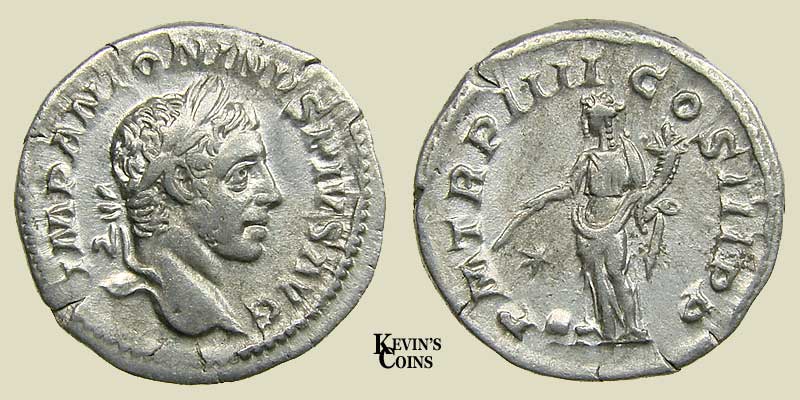
Silver Denarius (19mm 2.67g) Struck AD 220 Rome
Obv:IMP ANTONINVS PIVS AVG Laureate head right
Rev: P M TR P IIII COS III P P Providentia standing left, holding cornucopia and wand over globe, star in left field
RIC 42, Sear 7532
ex. AES You Like It
|
The Front (Obverse): The Emperor's Selfie
On the front, you see the portrait of the young emperor wearing a laurel wreath (the ultimate Roman symbol of victory and success).
- The Text: IMP ANTONINVS PIVS AVG
- What it means: This stands for Imperator Antoninus Pius Augustus. Now, wait a minute—his history-book name is Elagabalus, so why does the coin say Antoninus?
- The Gossip: Elagabalus was actually a teenager from Syria named Varius Avitus Bassianus. To make his rule look legitimate to the Romans, his powerful mother and grandmother claimed he was the secret, illegitimate son of the incredibly popular former emperor Caracalla (whose official royal name was Marcus Aurelius Antoninus). So, he put "Antoninus" on his money to say, "Hey Romans, don't worry, I'm totally part of the family you love!"
The Back (Reverse): Divine Propaganda
Roman coins weren't just money; they were the newspapers of the ancient world! The back of this coin is meant to reassure the public that the Empire is in smart, safe hands.
- The Image: It shows Providentia, the Roman goddess of foresight, looking ahead, planning for the future, and keeping the empire safe. She is standing and holding a cornucopia (a horn of plenty filled with food) and pointing a magic-looking wand over a globe at her feet. This symbolizes total world domination and the promise that the emperor will make sure everyone is fed and happy.
- The Star: There is a little star floating in the background. Elagabalus was a high priest of a Syrian sun god (Elagabal), and he often slipped little religious shout-outs like stars or suns onto his Roman coins to honor his favorite deity.
- The Text: P M TR P IIII COS III P P
- What it means: This looks like alphabet soup, but it's actually his official Roman resume and a timestamp! It stands for Pontifex Maximus (Chief Priest), Tribunicia Potestas IV (Holder of Tribunician Power for the 4th time), Consul III (Consul for the 3rd time), and Pater Patriae (Father of the Country). These official titles are how historians know the exact year the coin was stamped (AD 220)!
Fun Fact
Elagabalus was only about 16 years old when this coin was made. He famously shocked Rome by trying to replace Jupiter with his Syrian sun god, marrying a Vestal Virgin (a huge Roman taboo), and throwing wild, lavish parties. He was so eccentric that the Roman guards eventually got fed up and overthrew him just two years after this coin was minted
|