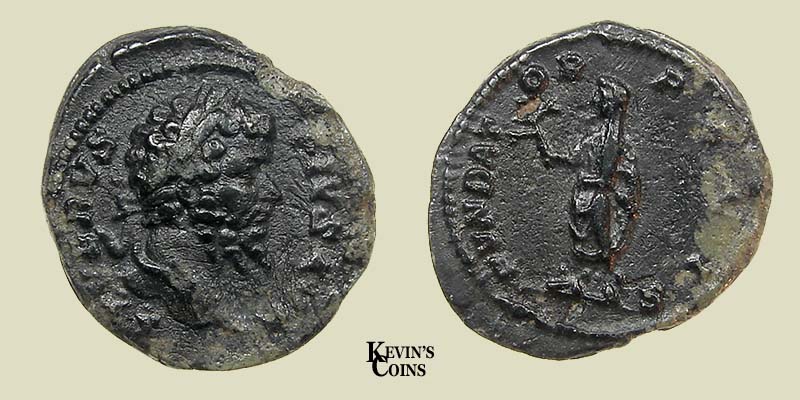
"Limes" Denarius  cf. RIC 210


"Limes" Denarius (18mm 3.14 g) Uncertain mint

OBV: SEVERVS PIVS AVG Laureate head right

REV: FVNDATOR PACIS Septimius Severus, togate, standing left, and holding an olive branch

cf. RIC IV 210 cf. Sear 6282
Uncleaned Coin Find

1. The Front (Obverse)

  • What you see: A portrait of the emperor wearing a laurel wreath, looking to the right.
  • The Text: SEVERVS PIVS AVG
  • What it means: This translates to "Severus, Pious, Augustus." Augustus was the official title for the Emperor, and Pious was a way to show everyone he was dutiful and respected the gods and the Roman state.

2. The Back (Reverse)

  • What you see: Septimius Severus standing, dressed in a traditional Roman toga, holding out an olive branch.
  • The Text: FVNDATOR PACIS
  • What it means: This translates to "Founder of Peace." This is classic Roman political spin! Septimius Severus actually came to power during a brutal civil war (a period called the Year of the Five Emperors). By putting "Founder of Peace" and an olive branch on his money, he was telling the public: "Hey, the wars are over, I've brought stability back to Rome!"

3. Why it’s called a "Limes" Denarius

An official Roman denarius was supposed to be made of high-quality silver. However, this coin is made of base metal (like bronze or copper alloy) or very low-grade silver.

The word "Limes" (pronounced lee-mehs) refers to the borders or frontiers of the Roman Empire. Historians have two main theories for why these bronze "silver" coins exist:

  1. The Border-Money Theory: The empire didn't want to send actual high-value silver coins out to dangerous border forts where they might get captured by rival tribes. Instead, they minted these local bronze versions to keep the frontier economies moving.
  2. The Inflation Theory: As Rome ran low on cash, local mints cast these using official coins as molds to create emergency pocket change when real silver wasn't available.

The Catalog Number

The cf. RIC IV 210 reference means it matches entry number 210 in volume 4 of the Roman Imperial Coinage catalog (the ultimate rulebook for Roman coin collectors). The cf. means "compares to"—it's a base-metal version of a coin that was originally designed to be struck in pure silver!

Site hosted free courtesy of VCoins.com
Ancient Coins on Vcoins

Untitled 1

In an effort to spare you my horrible grammar and spelling, I use artificial intelligence to assist in content creation.

Visit My Blog

logo

Email Kevin

*