|
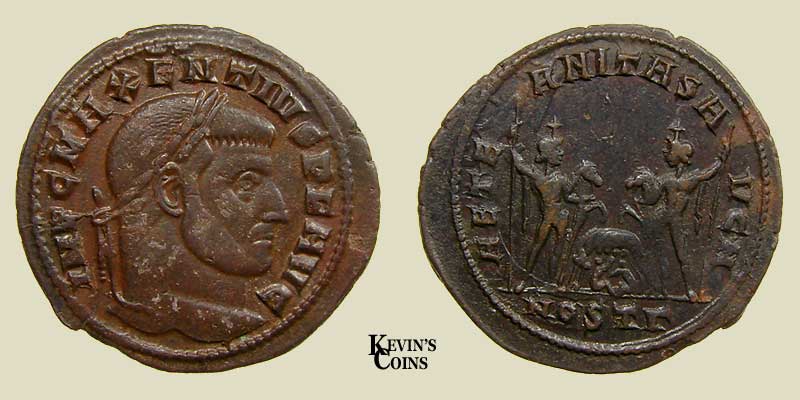
Billon Follis (28mm, 5.8gm) Struck 309-312 A.D. Ostia
Obv: IMP C MAXENTIVS P F AVG Laureate head right
Rev: AETERNITAS AVG N Castor and Pollux, each with a star above cap, naked but for chlamys hanging from shoulders, standing facing each other, each leaning on scepter with outer arm and holding bridled horse with inner arm, wolf and twins between them MOSTΓ in exergue
RIC VI 16 Sear 14976
ex. Beast Coins
Maxentius was a fascinating ruler who was considered a "usurper" (an unofficial emperor) by his rivals, and he is most famous for losing the historic Battle of the Milvian Bridge to Constantine the Great. Because Maxentius controlled Rome and Italy, his coins are packed with proud, traditional Roman imagery.
Here is a breakdown of what the symbols and words on this coin mean:
The Front (Obverse)
- What it shows: A portrait of Emperor Maxentius looking to the right, wearing a laurel wreath (the ultimate ancient Roman symbol of victory and power).
- The Text: IMP C MAXENTIVS P F AVG
- The Translation: Imperator Caesar Maxentius Pius Felix Augustus. In plain English, this translates to "Commander Caesar Maxentius, Dutiful and Fortunate, Supreme Ruler." It’s the ultimate ancient hype-text!
The Back (Reverse)
The back of this coin is incredibly detailed and is all about hyping up the history of Rome to make Maxentius look legit.
- What it shows: You see the famous mythological twin brothers, Castor and Pollux (the Dioscuri), standing face-to-face. They each have a star floating above their special hats, are wearing short cloaks over their shoulders, and are holding onto their trusty, bridled horses.
- But Wait, thee is more!: Look closely down between their legs! You will spot the famous Roman Wolf nursing the twin babies Romulus and Remus—the legendary founders of Rome.
- The Text: AETERNITAS AVG N
- The Translation: Aeternitas Augusti Nostri, which means "The Eternity of Our Emperor." Maxentius was using Rome's oldest legends to say, "Just like Rome's history, my rule is timeless and eternal!"
The Mint Mark (Bottom of the Back)
- The Text: MOSTΓ
- The Meaning: This tells us exactly where the coin was made. The M stands for Moneta (money/mint), OST stands for Ostia (the busy port city right outside of Rome where the mint was located), and the Greek letter Gamma (Γ) means it was struck in the 3rd workshop of that mint.
|