|
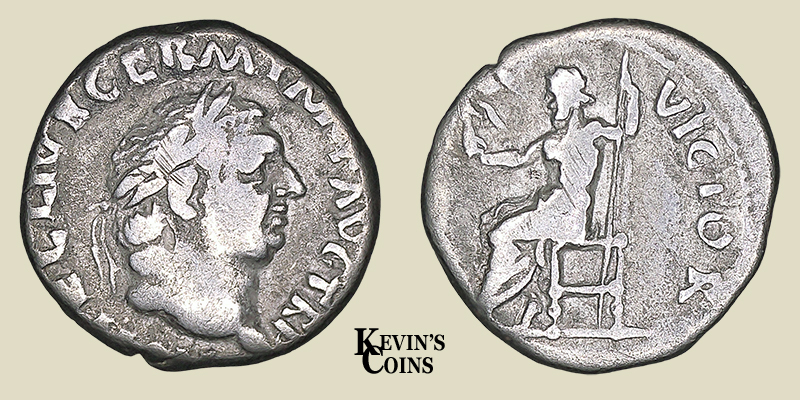
Silver Denarius (16mm 2.7g) struck A.D. 69 Rome
Obv: A VITELLIVS GERM IMP AVG TR P Laureate head right
Rev: IVPPITER VICTOR Jupiter seated left, holding Victory in right hand, scepter in left
RIC I 93. BMC-22, RSC 42 cf Sear 2197
CNG Electronic Auction 151, lot 224, ex Richard Winokur collection
|
|
This Silver Denarius steps the historical drama up another notch. It brings us straight to Emperor Number Three of the wild Year of the Four Emperors: Vitellius. If Galba's story was a political thriller, Vitellius’s story is a mix of a chaotic frat party and an absolute battlefield disaster. Here is the context behind this piece of silver.
The Backstory: Rome's Most Unlikely Emperor
After Galba was assassinated in January of 69 AD, Otho grabbed the throne in Rome. But way up north on the German border, the massive, rough-and-tumble legions had already declared their own commander emperor: Aulus Vitellius. Vitellius was not your typical battle-hardened general. Historically, he was famous for two things: being a massive glutton who spent fortunes on lavish banquets, and being incredibly friendly with the troops. He didn’t actually lead his armies south—his brutal generals did the fighting for him. They marched into Italy, defeated Otho’s forces, and prompted Otho to commit suicide. By April of 69 AD, Vitellius was the last man standing, and he happily headed to Rome to party.
Decoding the Coin: Political Spin At Its Best
When you examine Kevin's Vitellius denarius, the design choices are dripping with calculated political messaging:
The Obverse (Front): Features the portrait of Vitellius with the title A VITELLIVS GERM IMP AVG TR P. That GERM stands for Germanicus. He proudly used this title because his power base was the fierce army of Germania.
The Profile: Roman coin engravers were surprisingly honest. Instead of giving Vitellius a chiseled, heroic jawline, his coins clearly show his heavy jowls and double chin—matching historical descriptions of his love for the finer things in life.
The Reverse : IVPPITER VICTOR The Literal Translation: "Jupiter the Victorious" or "Jupiter the Conqueror. Vitellius was essentially telling the Roman public: "Hey everyone, look! The civil war is over, I won, and Jupiter himself gave me this victory. My rule is totally legitimate, so everybody can calm down now."
The Imperial Party Animal
Vitellius’s reign in Rome lasted only about eight months, and he spent almost all of it eating. Roman historians like Suetonius claim he feasted four times a day, famously inventing a massive, expensive silver platter dish called "The Shield of Minerva," which blended pike livers, pheasant brains, and flamingo tongues.While he was feasting, the empire's treasury was draining, and his soldiers ran wild through the streets of Rome, treating the capital city like an occupied enemy zone.
A Brutal Ending
While Vitellius was enjoying his buffet, the legions in the East got jealous and declared their favorite general, Vespasian, emperor. Vespasian’s battle-tested troops marched on Rome. Realizing the jig was up, a terrified Vitellius actually tried to abdicate and surrender, but his own soldiers wouldn't let him. When Vespasian’s men breached the city gates in December of 69 AD, they dragged Vitellius out of a caretaker's shack, paraded him through the streets while pelting him with dung, tortured him, and threw his body into the Tiber River.
|