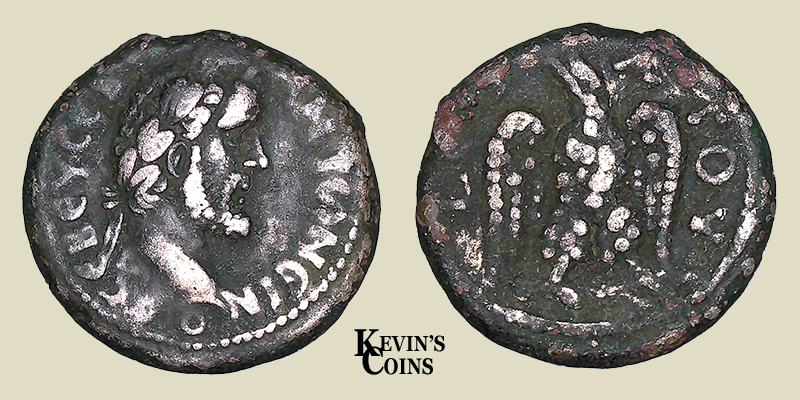
Antoninus Pius Billon Tetradrachm (25mm 14.25g)
Alexandria Egypt AD 145-146

Obv: ANTΘNEINOC CEB EVCEB Laureate head at right.

Rev: Eagle standing facing with open wings and looking to the left. L ENATOV (year 9)

Emmett 1378
ex. Ricky Newhart

1. The Front (Obverse): Meet the Emperor

On the front, you see a profile portrait of the emperor wearing a laurel wreath.

The Greek lettering around him says: ANTΩNEINOC CEB EVCEB

  • ANTΩNEINOC = Antoninus
  • CEB = Sebastos (This is the Greek version of the Roman title "Augustus," which basically means "The Emperor").
  • EVCEB = Eusebes (This is the Greek version of "Pius," a nickname given to him because he was known for being incredibly respectful, dutiful, and kind).

2. The Back (Reverse): The Power of Rome

The back features a majestic eagle standing tall, spreading its wings, and looking off to the left.

  • Why an eagle? In Roman culture, the eagle was the ultimate symbol of Jupiter (the king of the gods) and represented the power and authority of the Roman legions. In Egypt, eagles had a long history of being used on coins by the previous Greek pharaohs (the Ptolemies), so it made the local population feel right at home.

The secret code next to the eagle says: L ENATOV

  • The L is an ancient Egyptian symbol that means "Regnal Year" (the year of the king's rule).
  • ENATOV means "Ninth."
  • Put it together, and it tells us the coin was made in the 9th year of Antoninus Pius's reign, which pins it perfectly down to AD 145–146.

The Big Picture

This coin is a perfect example of a "cross-cultural mashup." It was ordered by a Roman emperor, minted using Greek language and currency values, to be spent by Egyptians buying goods along the Nile River.

Site hosted free courtesy of VCoins.com
Ancient Coins on Vcoins

Untitled 1

In an effort to spare you my horrible grammar and spelling, I use artificial intelligence to assist in content creation.

Visit My Blog

logo

Email Kevin

*