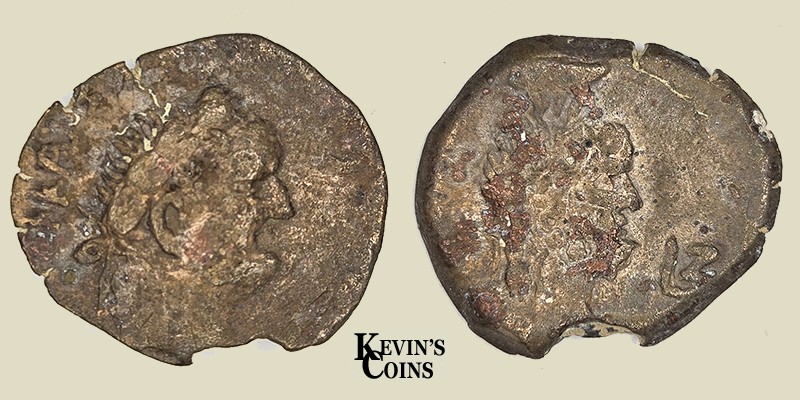
Vespasian Bronze Diobol Alexandria, Egypt AD 74-75


Vespasian Bronze Diobol (25mm 8.56g)
Alexandria, Egypt AD 74-75

ObvAYTOK KAIΣ ΣEBA OYEΣΠAΣIANOY Laureate head right,

Rev: Serapis bust r. LZ (year 7) in right field, T in left

Emmett 218, RPC II, 2444

1. The Front (Obverse): The Emperor

  • The Image: You see the "laureate" head of Emperor Vespasian looking to the right, meaning he is wearing a laurel wreath—the ultimate ancient Roman symbol of victory and honor.
  • The Inscription (Greek): AYTOK KAIΣ ΣEBA OYEΣΠAΣIANOY
    • This is a Greek translation of standard Roman imperial titles. Autokrator translates to Emperor/Commander, Kaisar means Caesar, and Sebastos means Augustus (Venerable). The final word is just his name, Vespasian.

2. The Back (Reverse): The God of Alexandria

  • The Image: A bust of the god Serapis looking right.
  • Who was Serapis? He was a "mashup" god created centuries earlier by the Greek rulers of Egypt to unite their Greek and Egyptian citizens. Serapis combined qualities of Greek gods like Zeus and Hades with Egyptian gods like Osiris and Apis. He wore a modius (a grain-measuring basket) on his head to symbolize abundance and fertility, which was a huge deal because Egypt was the main breadbasket supplying grain to Rome.
  • The Inscription: You see LZ, which translates to Year 7 of Vespasian's reign. In ancient Egyptian-Greek coinage, the letter "L" was a symbol used to denote "Year," and "Z" is the Greek numeral for 7. Since Vespasian came to power in late AD 69, Year 7 places the actual minting of this reverse side right around AD 74–75.

Site hosted free courtesy of VCoins.com
Ancient Coins on Vcoins

Untitled 1

In an effort to spare you my horrible grammar and spelling, I use artificial intelligence to assist in content creation.

Visit My Blog

logo

Email Kevin

*