
|
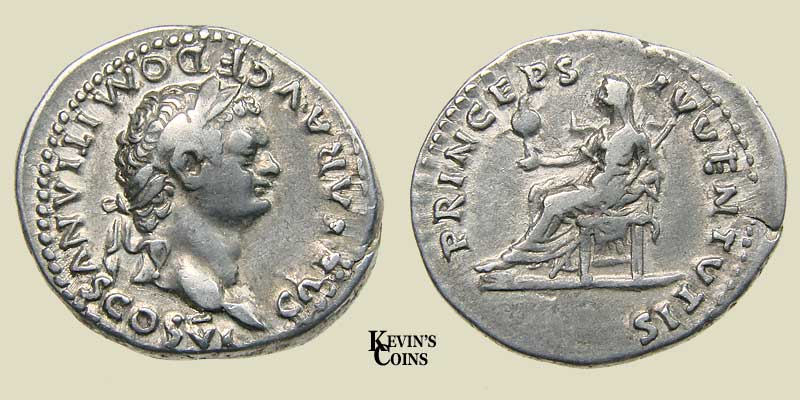
Silver Denarius (19mm 3.39g) Struck A.D. 79 under Vespasian, Domitian as Caesar minted in Rome Obv: CAESAR AVG F DOMITIANVS COS VI Laureate bust right Rev:PRINCEPS IVVENTVTIS Vesta seated left, holding palladium and scepter RIC-244 |
|
This is a Roman silver coin loaded with ancient family politics, propaganda, and some classic Roman mythology. This specific piece is a Silver Denarius minted in Rome in A.D. 79. It was struck under the authority of Emperor Vespasian, but it actually features his youngest son, Domitian, who was acting as "Caesar" (a prince or heir-in-waiting) at the time. The ancient messages stamped onto both sides of this coin tell a fascinating story. The Front (Obverse): The Prince's ResumeOn the front, you see a portrait of a young Domitian looking to the right, wearing a laurel wreath. The Latin letters curving around his head read:
The Back (Reverse): Peace and Traditional ValuesThe back of the coin gets a bit more symbolic. It features a goddess sitting comfortably on a chair, holding a tiny statue in one hand and a long staff (scepter) in the other. The text reads: This translates to "Prince of Youth." It was a special honorary title given to the young princes of the imperial family. By putting this on a coin that changed hands every day in marketplaces, the Emperor was telling the public, "Don't worry about the future of Rome, we have a great young leader ready to go." The seated woman is Vesta, the Roman goddess of the hearth, home, and family. She is holding two specific items:
The Big Picture MeaningWhen you look at this coin as a whole, it’s pure political advertising. The Flavian family (Vespasian, Titus, and Domitian) had only taken over Rome a decade earlier after a chaotic civil war. They used coins like this to scream stability. By showing the young prince Domitian on the front and the goddess of home and eternal safety (Vesta with the Palladium) on the back, the message to the Roman people was clear: "Our family has got this covered. Rome is safe, the gods are happy, and the future is secure." Ironically, just a few months after this coin was minted, Vespasian passed away, Domitian's older brother Titus became emperor, and eventually, Domitian himself would take the throne as one of Rome's most infamous and ruthless emperors! |

