
|
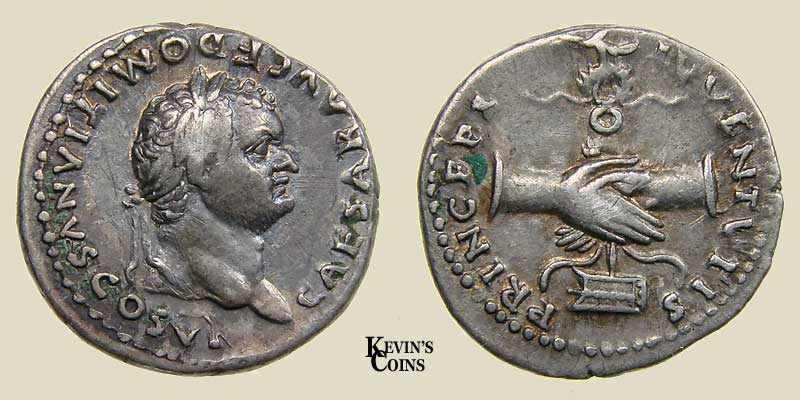
Silver Denarius (18mm, 3.32g) Struck 79 A.D. under Vespasian, Domitian as Caesar minted in Rome Obv: CAESAR AVG F DOMITIANVS COS VI Laureate bust right Rev:PRINCEPS IVVENTVTIS Clasped hand on ships prow, holding a legionary eagle.. RIC-246 (Vespasian) ex York Coins ex William C Boyd Collection, Baldwins Auction (42) 9/26/2005, Purchased by Mr. Boyd from Sadd, D (?) 11/1898
|
|
This silver denarius tells a great story of family pride, military might, and a youngest son waiting for his turn to rule. The coin was struck in 79 A.D. under the authority of Rome’s emperor, Vespasian. However, the face on the coin isn't Vespasian—it's his youngest son, Domitian, who was serving as "Caesar" (prince/heir-in-training) at the time. The Front (Obverse): A Prince in WaitingThe front features a portrait of a young Domitian wearing a laurel wreath (the classic Roman symbol of victory). Around his head is the Latin inscription:
The Back (Reverse): Loyalty and the FleetThe back features a mix of symbols—clasped hands resting on the front tip (prow) of a warship, holding a legionary eagle standard. Surrounding it is the text:
The Visual Symbols:
The Big Picture MeaningWhen you put it all together, this coin was a clever piece of political propaganda. At the time it was minted, the Flavian family (Vespasian, oldest son Titus, and youngest son Domitian) had only been in power for about a decade after a brutal civil war. By putting the "Prince of Youth" on a coin alongside symbols of the army, the navy, and trust (the hands), the imperial family was sending a reassuring message to the public: "The empire is stable, the military is loyal, and the next generation of our family is ready to keep Rome safe and strong." Ironically, 79 A.D. was the exact year Vespasian died, Titus became emperor, and Domitian moved one step closer to eventually ruling Rome himself. William C. Boyd (1842–1906) was a well-known British numismatist—someone who deeply loved and studied coins. He was an active member of the Royal Numismatic Society and served as their Honorary Treasurer. He was famous for having an incredible eye for detail, often spotting rare or unpublished varieties that others missed.
|


