|
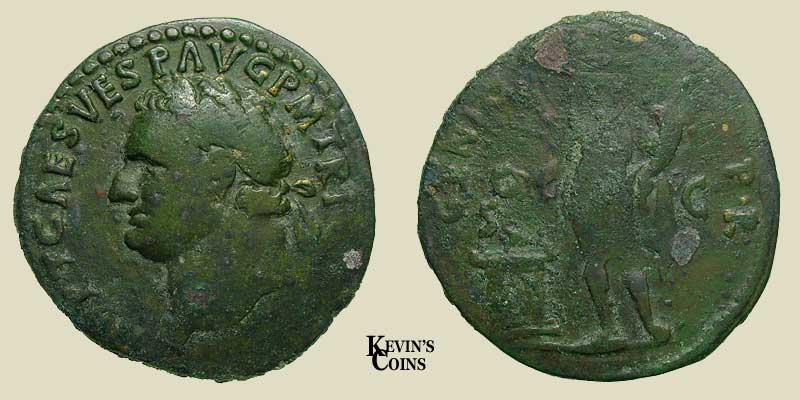
Copper AS (26mm 6.50g) Struck A.D. 80-81 Rome
Obv: IMP T CAES VESP AVG P M TR P COS VIII laureate head right
Rev: GENIO P R S C Genius standing left, sacrificing out of a patera over an altar, holding a cornucopiae
RIC 127
ex. Harry Stewart Collection , ex. Robert G. Lilly Collection
|
|
Every element on this piece of metal carried a specific message to the people of the Roman Empire.
The Front (Obverse): The Emperor's Portrait
On the front of the coin, you see the side profile of Emperor Titus wearing a laurel wreath (a classic symbol of victory and high honor).
The Latin text wrapping around his head acts like a giant resume of his achievements. Here is the translation of that abbreviation-heavy text (IMP T CAES VESP AVG P M TR P COS VIII):
- IMP T CAES VESP AVG: Imperator Titus Caesar Vespasianus Augustus. This translates to "Commander Titus Caesar Vespasian, the Emperor." Titus inherited his name and position from his dad, the previous emperor Vespasian.
- P M: Pontifex Maximus. This means "High Priest." It shows he is the absolute head of Roman state religion.
- TR P: Tribunicia Potestas. This means he held the "Tribunician Power," which legally protected him and gave him the power to veto laws—essentially making him the political protector of the everyday people.
- COS VIII: Consul for the 8th time. The Consul was the highest elected political office in Rome. Holding it eight times was a massive flex of political dominance.
The Back (Reverse): The Genius of Rome
The back of the coin features a figure standing next to a small altar, surrounded by the letters GENIO P R and a large S C.
- GENIO P R: This stands for Genio Populi Romani, which translates to "To the Genius of the Roman People." In Roman religion, a "Genius" wasn't a really smart person; it was a divine guardian spirit. Every person, place, and even the collective Roman public had one.
- What the Genius is doing: The figure is holding a cornucopia (a horn of plenty overflowing with food) in one hand to promise wealth and abundance. In the other hand, it holds a patera (a shallow ritual bowl) and is pouring a liquid offering over a sacrificial altar. This image was a message of peace, piety, and prosperity.
- S C: This stands for Senatus Consulto, meaning "By Decree of the Senate." Because copper and bronze coins were used by everyday citizens for daily transactions, the Senate legally stamped them to guarantee their value and show that the Emperor and the Senate were working together.
The Historic Context: Why this message mattered
The timing of this coin (80–81 AD) is incredibly dramatic. Titus had a tragically short reign of just over two years, and during that time, Rome faced disaster after disaster. Mt. Vesuvius erupted and buried Pompeii, a devastating fire tore through Rome, and a terrible plague broke out.
By putting the "Genius of the Roman People" on his coins, Titus was trying to boost public morale. It was a visual reassurance to a stressed-out population that said: "Our collective spirit is strong, the gods are being honored, and prosperity and plenty are returning to Rome."
|