
|
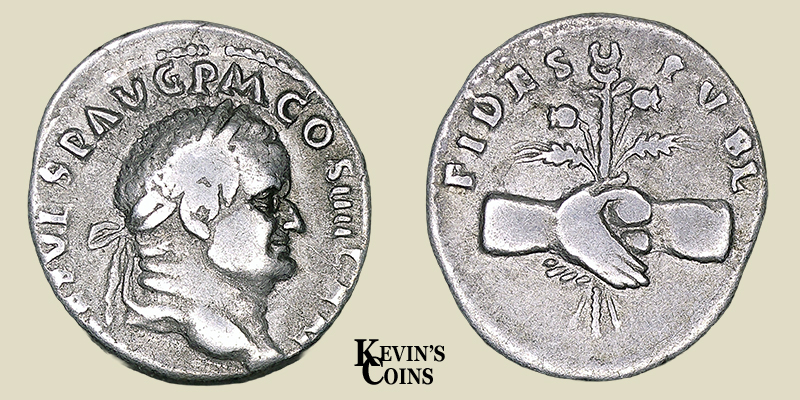
Silver Denarius (18mm, 3.2g) Struck A.D. 73 Rome Obv: IMP CAES VESP AVG P M COS IIII CEN Laureate head right Rev: FIDES PVBL Clasped hands holding winged caduceus between corn ears and poppies RIC II 55, Sear 2291 |
|
This silver denarius—minted in Rome around 72–73 AD—tells a powerful story about rebuilding a broken nation. At first glance, it looks like a standard piece of ancient pocket change. But if you look closer at the imagery and the political landscape of the time, this tiny coin reveals exactly how a brand-new emperor managed to save Rome from collapsing into total chaos. The Face of Stability: The ObverseOn the front (obverse) of the coin is a right-facing portrait of the Emperor Vespasian wearing a laurel wreath. The surrounding Latin inscription reads: (Imperator Caesar Vespasianus Augustus, Pontifex Maximus, Consul for the Fourth Time, Censor) This mouthful of titles was pure political strategy. Just three years before this coin was minted, Rome suffered through the Year of the Four Emperors (69 AD)—a brutal, bloody civil war where three rival generals seized and lost the throne in quick succession before Vespasian finally claimed it. Vespasian wasn't from an aristocratic family; he was a gritty, middle-class military general. To make the Roman people trust him, he rejected the idealized, god-like portraits of past tyrants like Nero. Instead, his coins used verism—a style of art that showed hyper-realistic, aged features. By showing his wrinkles, his receding hairline, and his famously stern, strained expression, Vespasian was telling Rome: "I am a serious, hard-working traditionalist. I am the seasoned veteran who is going to fix this country." The Public Promise: The ReverseThe back (reverse) of the coin contains the core message of Vespasian's early reign. It features the text FIDES PVBL (Fides Publica—"The Public Faith" or "Public Trust") and displays a highly symbolic image: two clasped hands holding a winged caduceus between ears of corn and poppies. Every single item in this image was chosen to reassure a deeply traumatized Roman public:
The Ultimate TakeawayWhen a Roman citizen held this denarius in 72 AD, they weren't just looking at money—they were looking at a piece of state-sponsored reassurance. The coin essentially delivered a direct promise from their new ruler: The war is over, the food supply is safe, the economy is back, and you can finally trust your government again. |

