
|
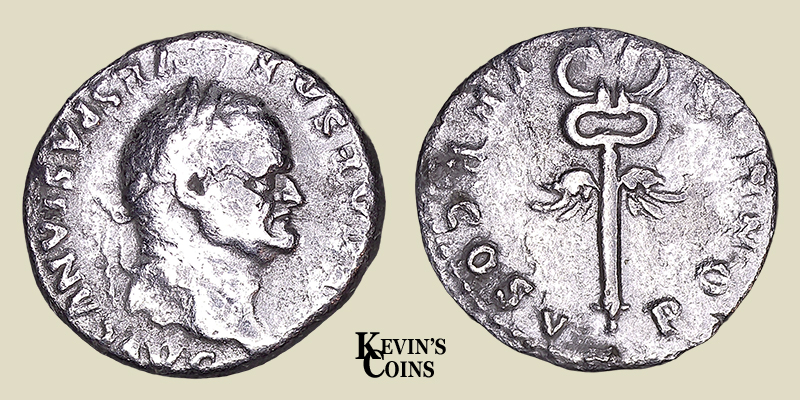
Silver Denarius (18.6mm 2.87g) Struck A.D. 75 Obv: IMP CAESAR VESPASIANVS AVG Laureate head right Rev: PON MAX TR P COS V Caduceus, Winged RIC II 75 Sears 2299 RIC II (2nd Edition) 703 |
 |
|
Good evening. This is Gualterus Cronkita reporting from the Forum in Rome. Tonight, our focus turns to an extraordinary piece of silver, freshly minted in the heart of the Roman Empire. The year is 75 A.D.—or, as the Romans count it, the fifth consulship of Emperor Vespasian. To truly understand what this small silver coin represents, we must flash back just six years to the catastrophic winter of 69 A.D., a dark chapter history now calls the "Year of the Four Emperors." Following the suicide of the notorious Emperor Nero, the Roman world tore itself apart in a bloody, multi-sided civil war. Three short-lived military commanders seized the throne in rapid succession, leaving the Roman economy in ruins, its treasury depleted, and the public's faith completely shattered. Then, out of the east, came a seasoned, no-nonsense military general named Titus Flavius Vespasianus. The coin you see before you is a direct product of the economic recovery program launched by this new Flavian dynasty. On the front, or obverse side, we see the laureate head of Vespasian himself. Look closely at that portrait. Unlike the idealized, god-like depictions of Nero or Augustus, Vespasian chose to be shown exactly as he was: a rugged, wrinkled, 65-year-old soldier with a furrowed brow. This was a deliberate piece of political public relations, signaling to the Roman citizens that a practical, hard-working man was finally at the wheel of state. But it is the back of the coin—the reverse—that tells the real story of the year 75 A.D. Stamped into the silver is a winged caduceus, the ancient staff of Mercury, the messenger god of commerce. For an empire emerging from the brink of total collapse, this symbol carried an urgent, optimistic message. It promised the restoration of trade, financial stability, and public prosperity. Surrounding that staff are the abbreviated titles of the Emperor's power: Pontifex Maximus—the high priest; Tribunicia Potestate—holder of the tribunician power; and Consul V—marking his fifth time serving as Rome’s chief magistrate. By the time this denarius left the Rome mint, Vespasian had successfully filled the empire's empty coffers, begun construction on a massive new amphitheater we know today as the Colosseum, and firmly re-established the rule of law. This coin was not just pocket change; it was a silver guarantee to every merchant in the Mediterranean that the storm had passed, and peace had returned to the Roman world. And that's the way it was, seventy-five years after the turn of the first century. This is Walter Cronkite. Good night. |

